Ambra proposes.You decide.
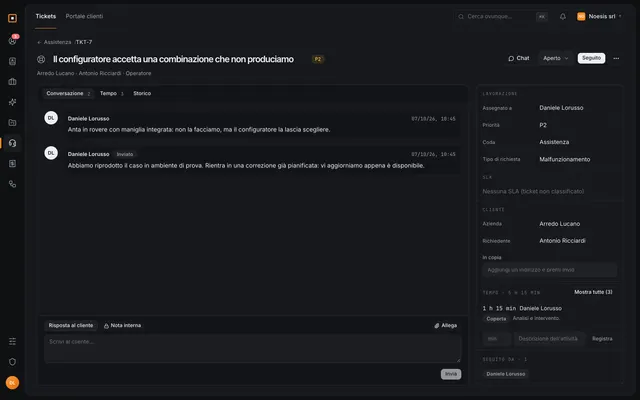
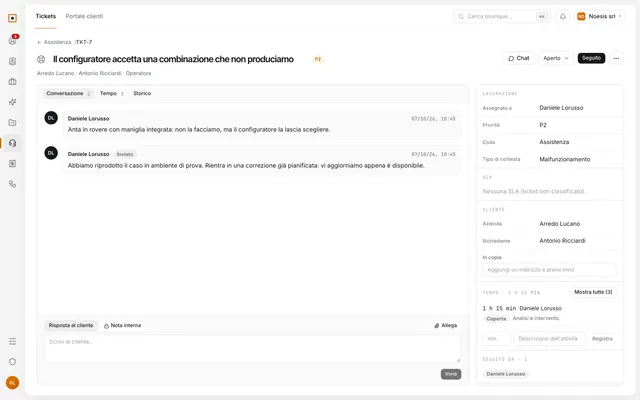
Hakubase’s AI works inside the gestures you already make: it triages an incoming ticket, drafts a reply, reads an invoice or a signed contract, prepares a project plan. Every result is a proposal.
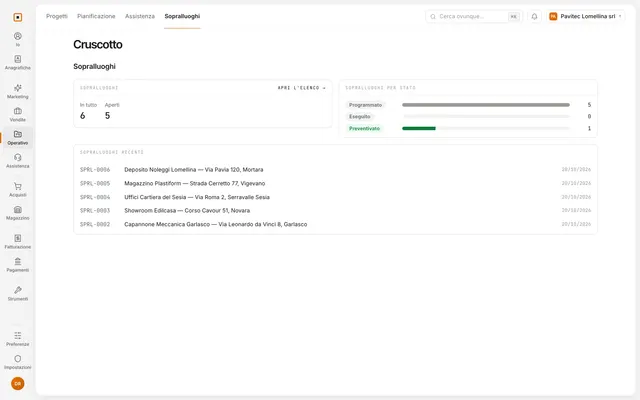
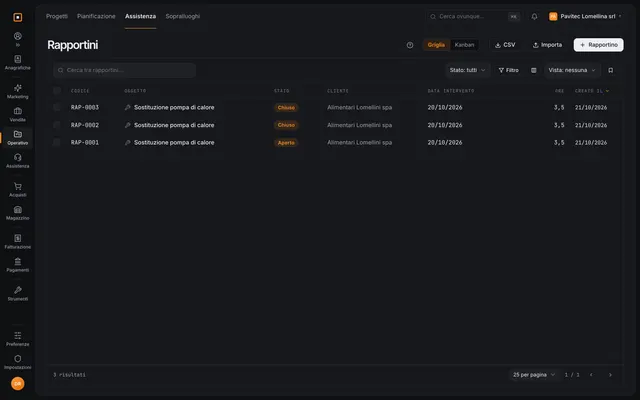
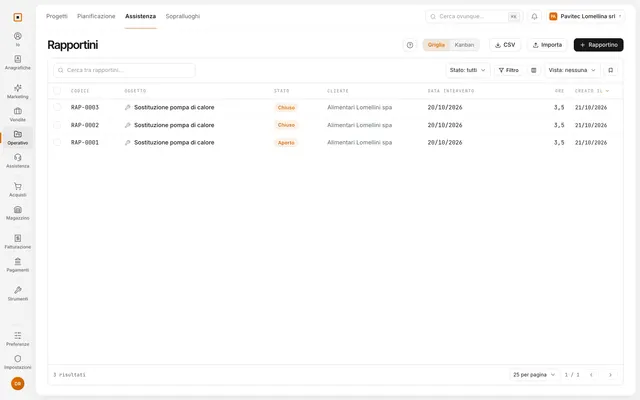
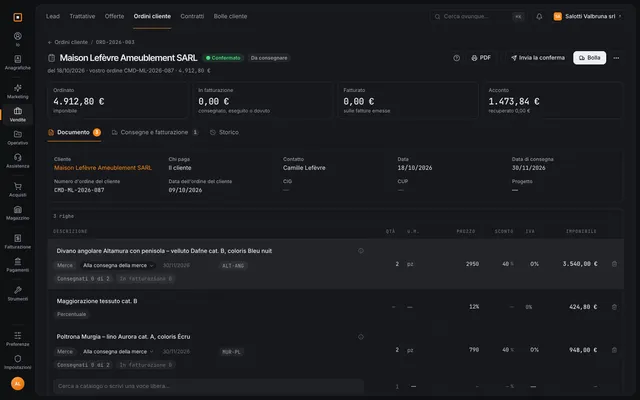
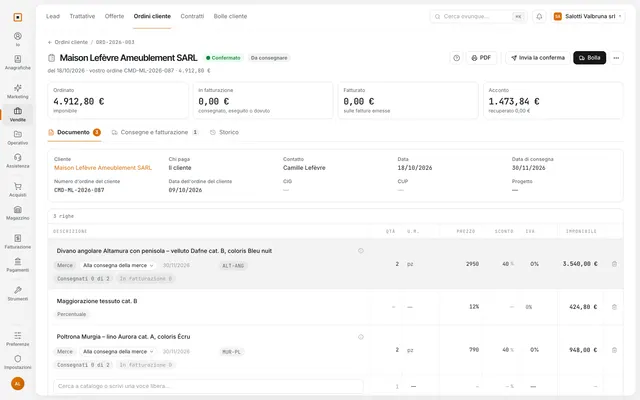
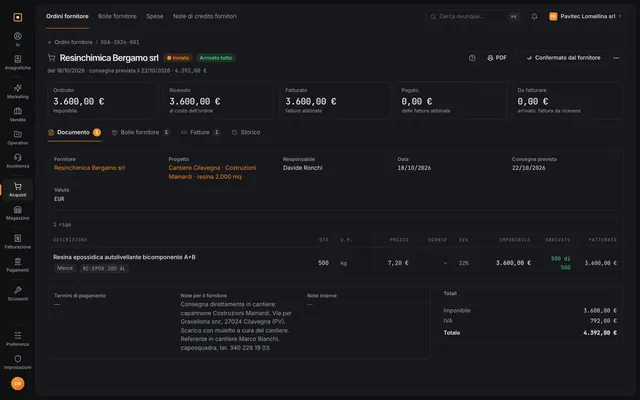
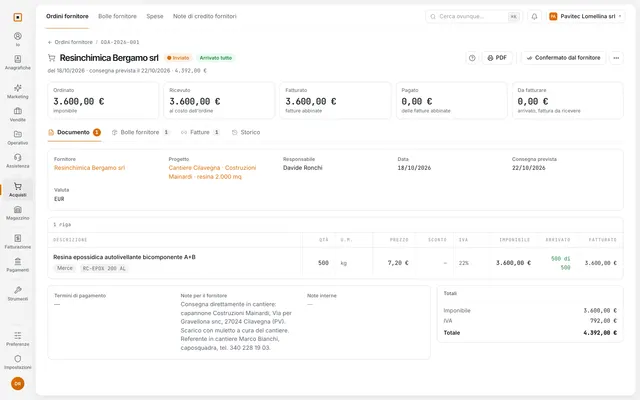
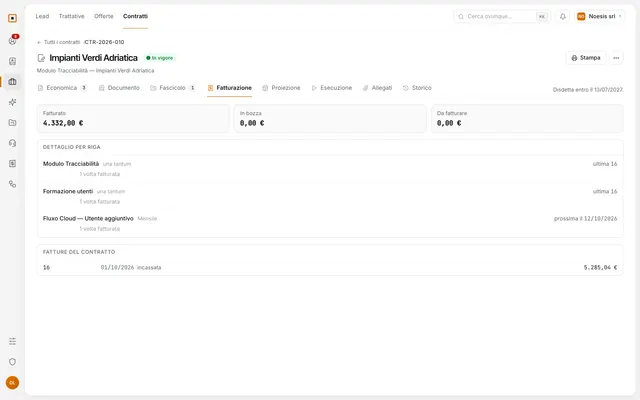
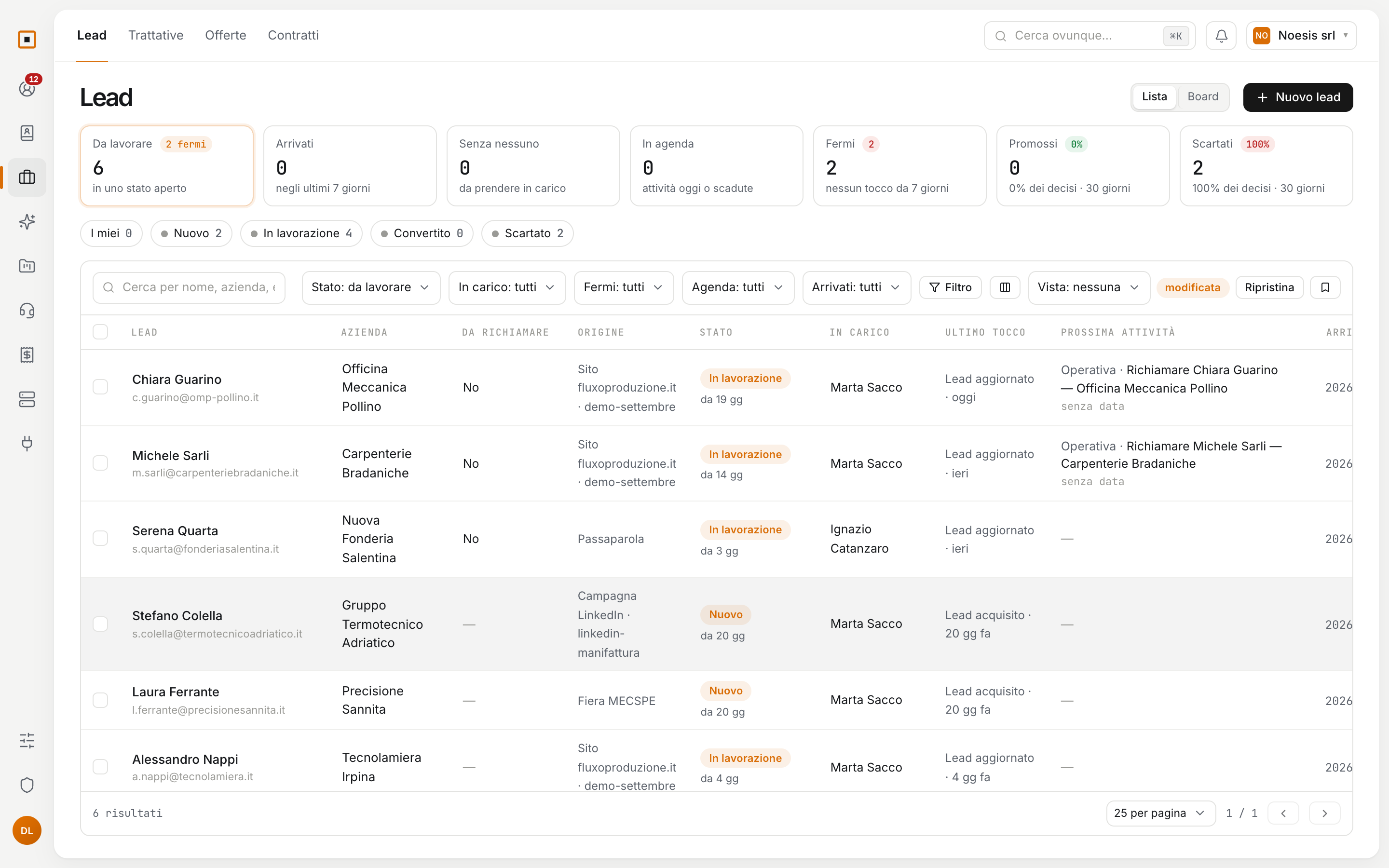
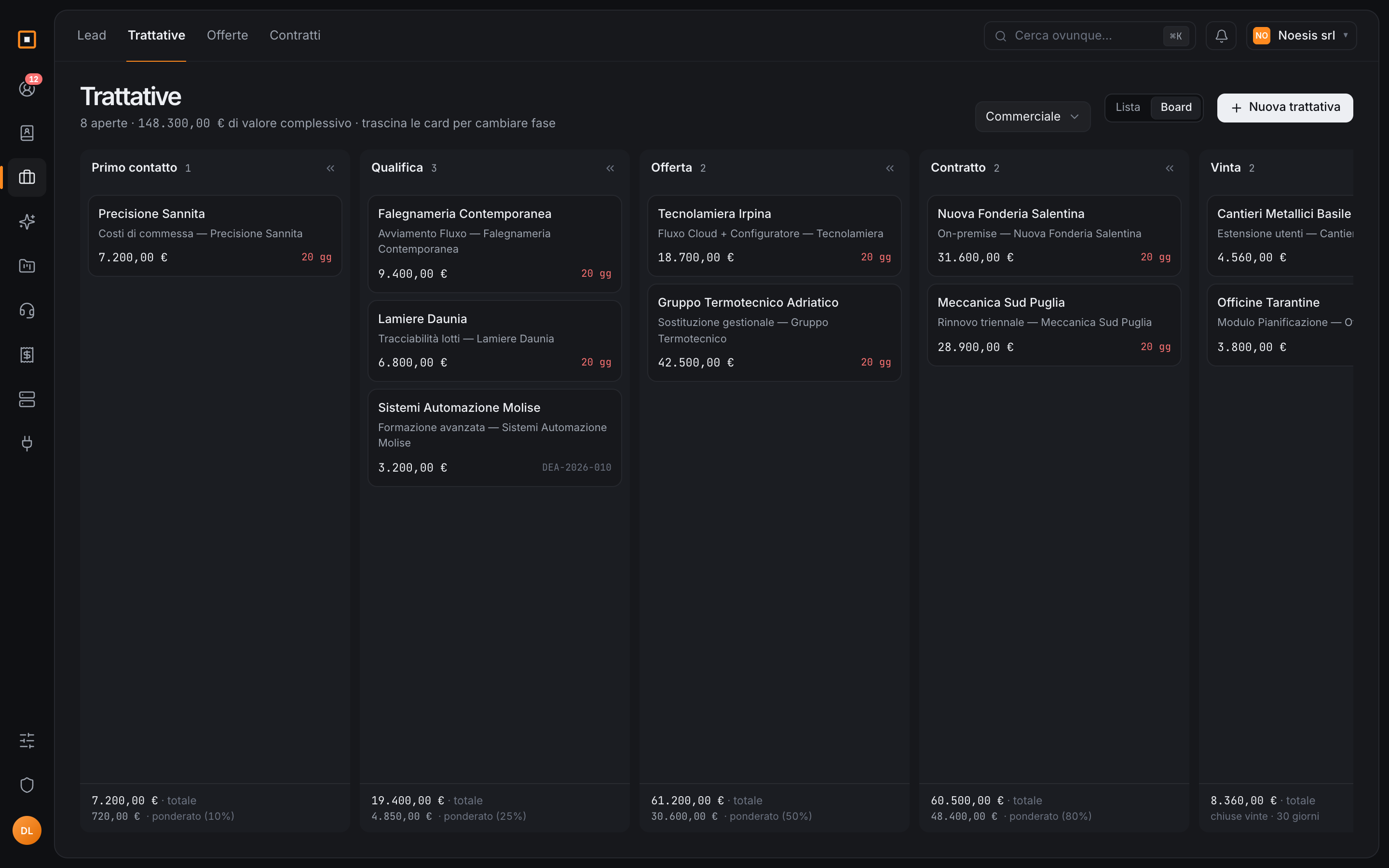
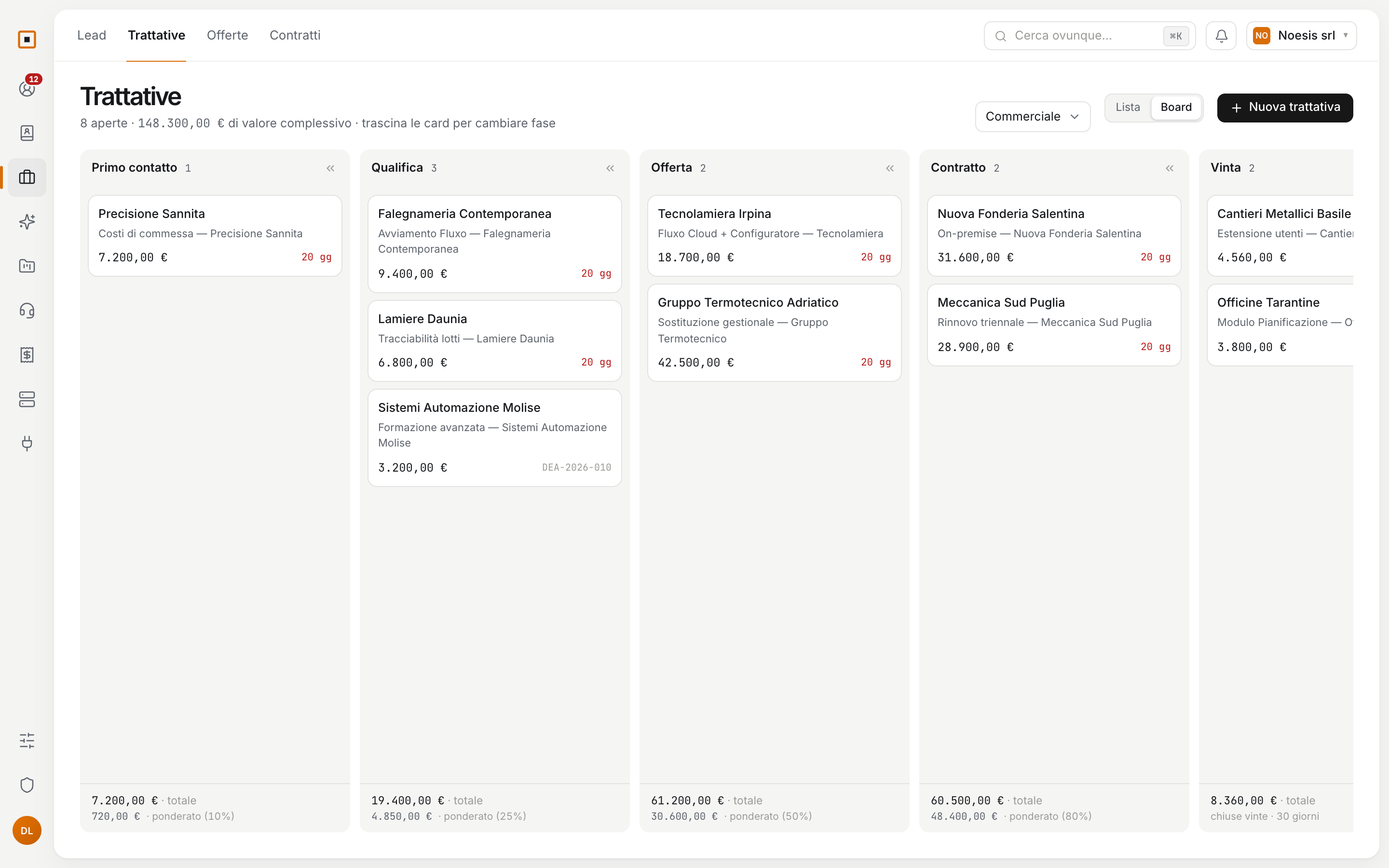
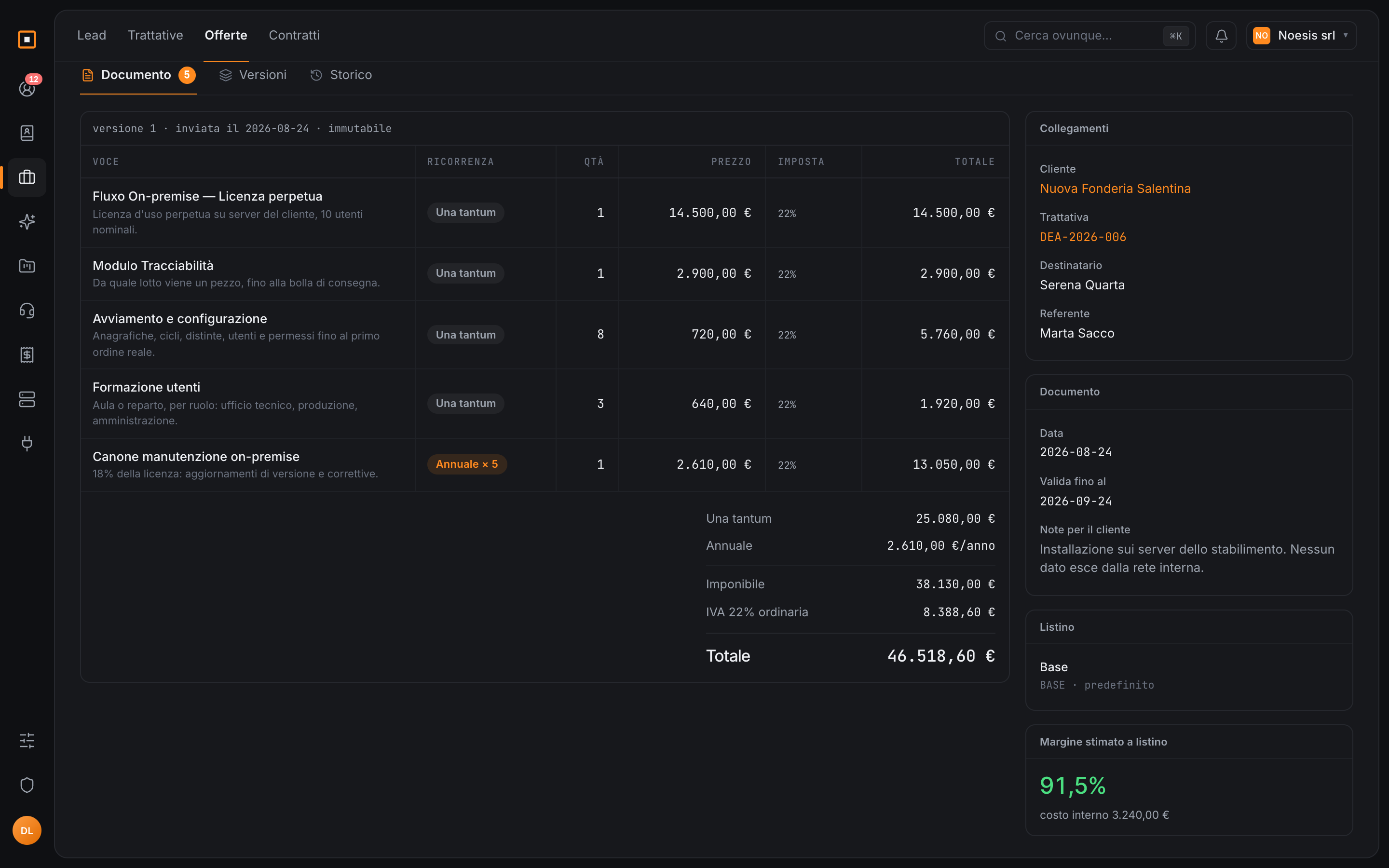
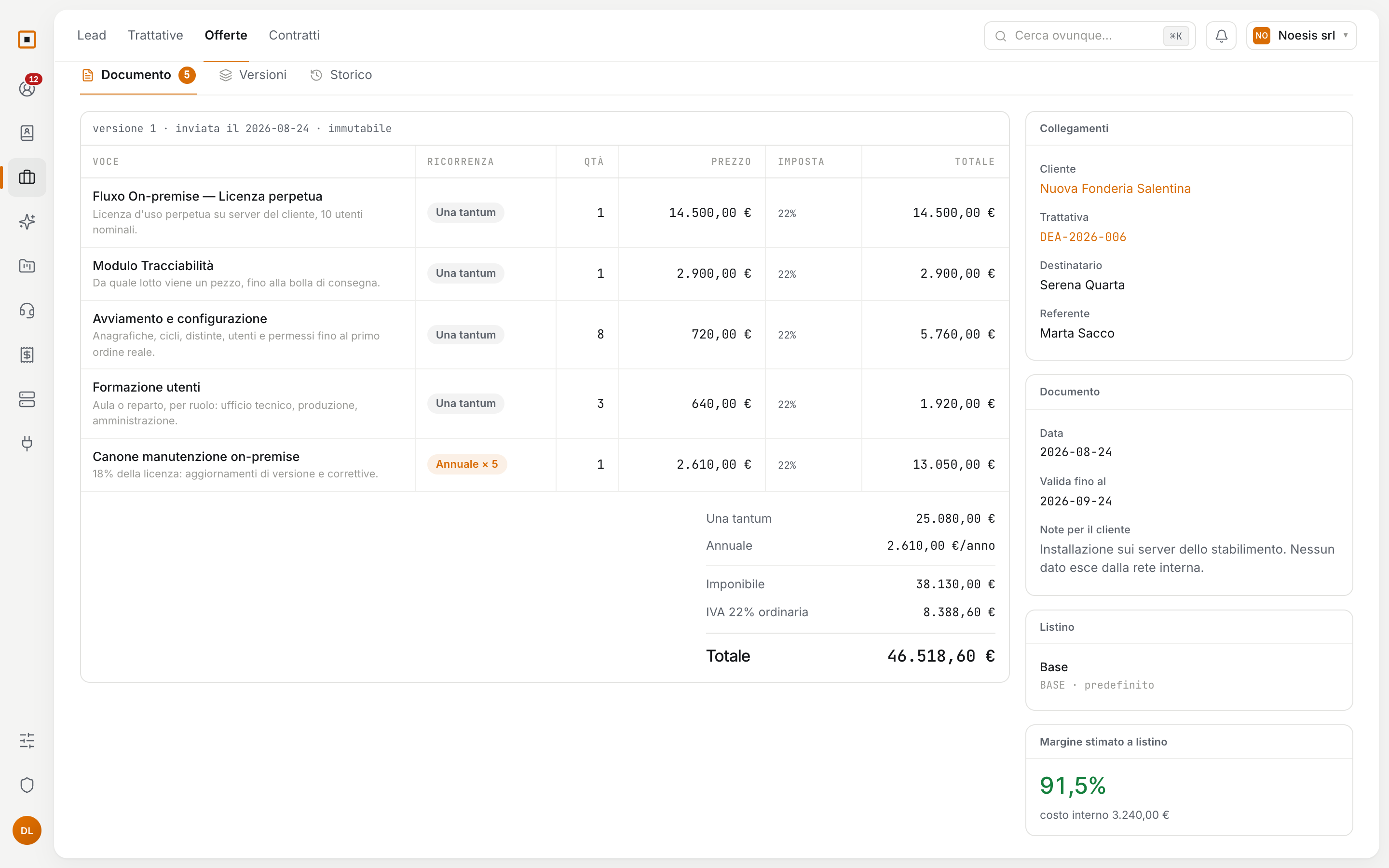
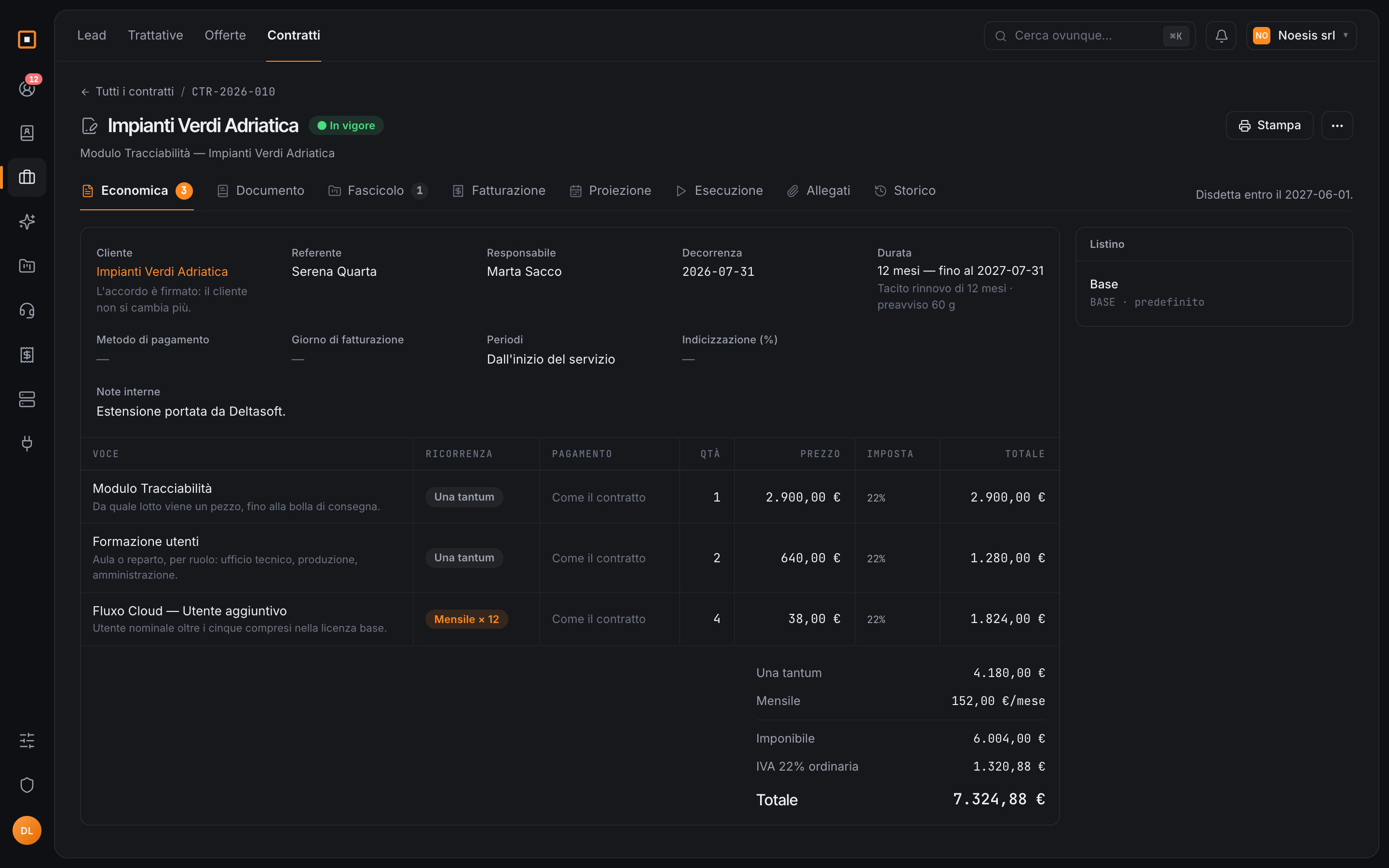
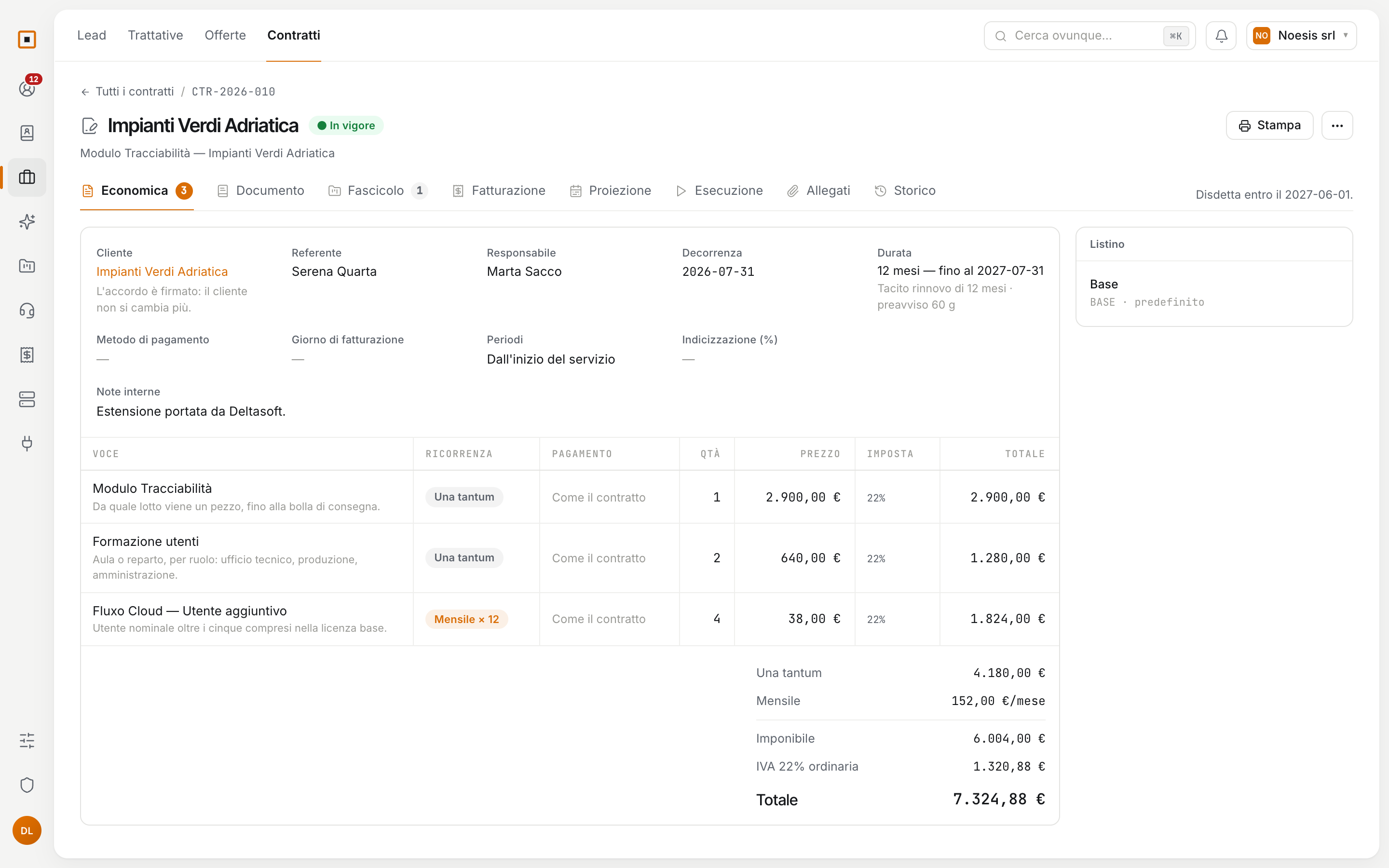
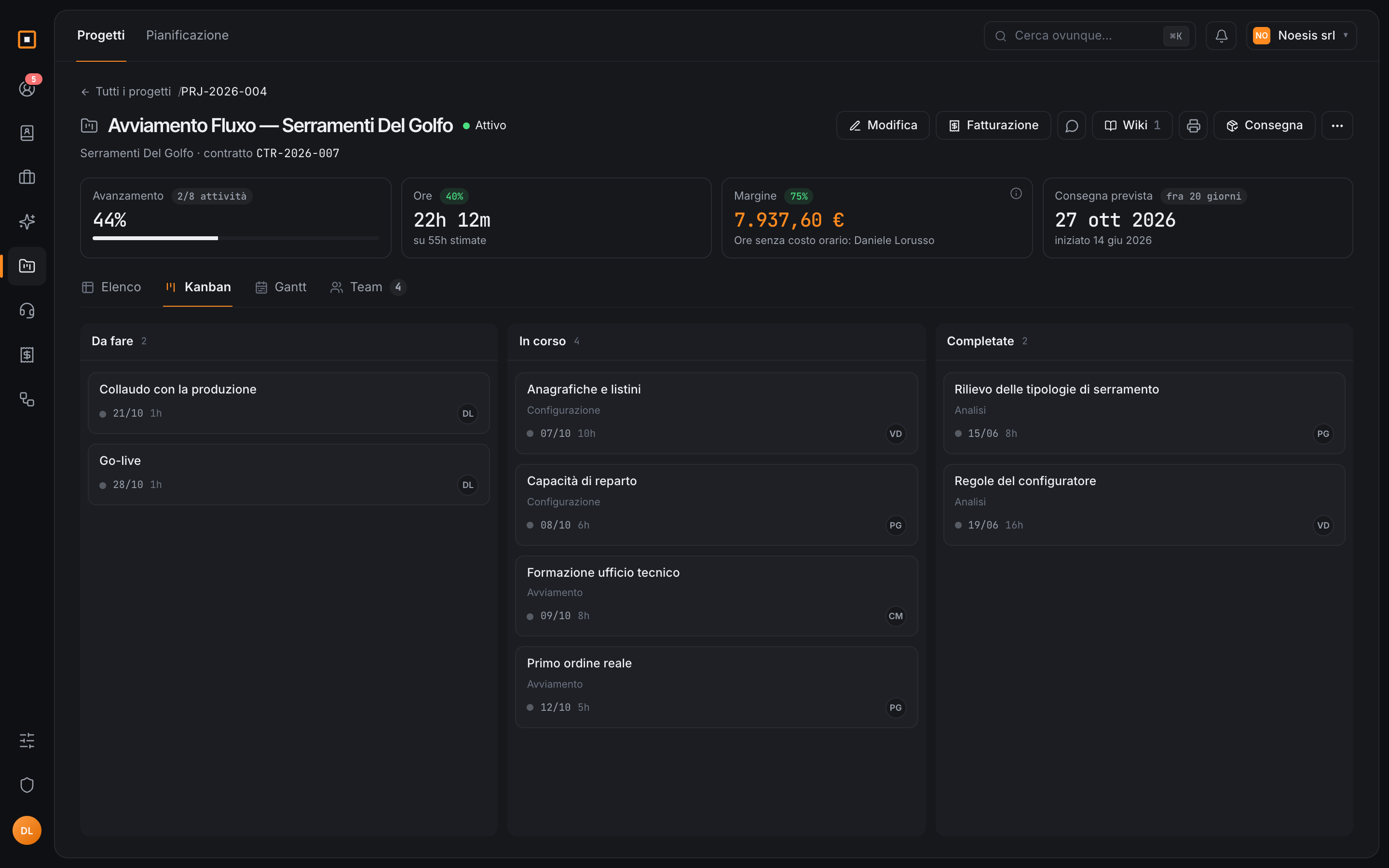
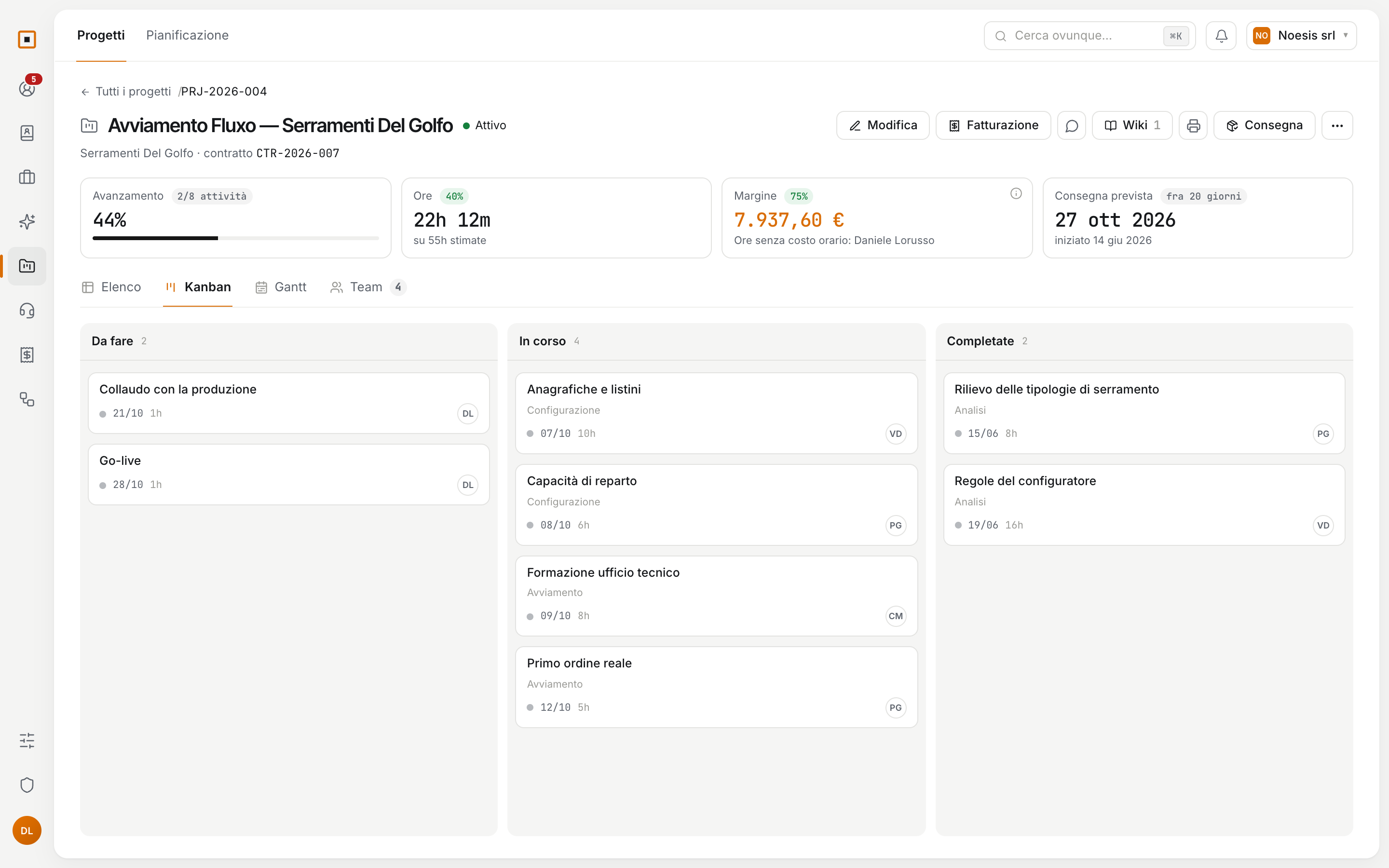
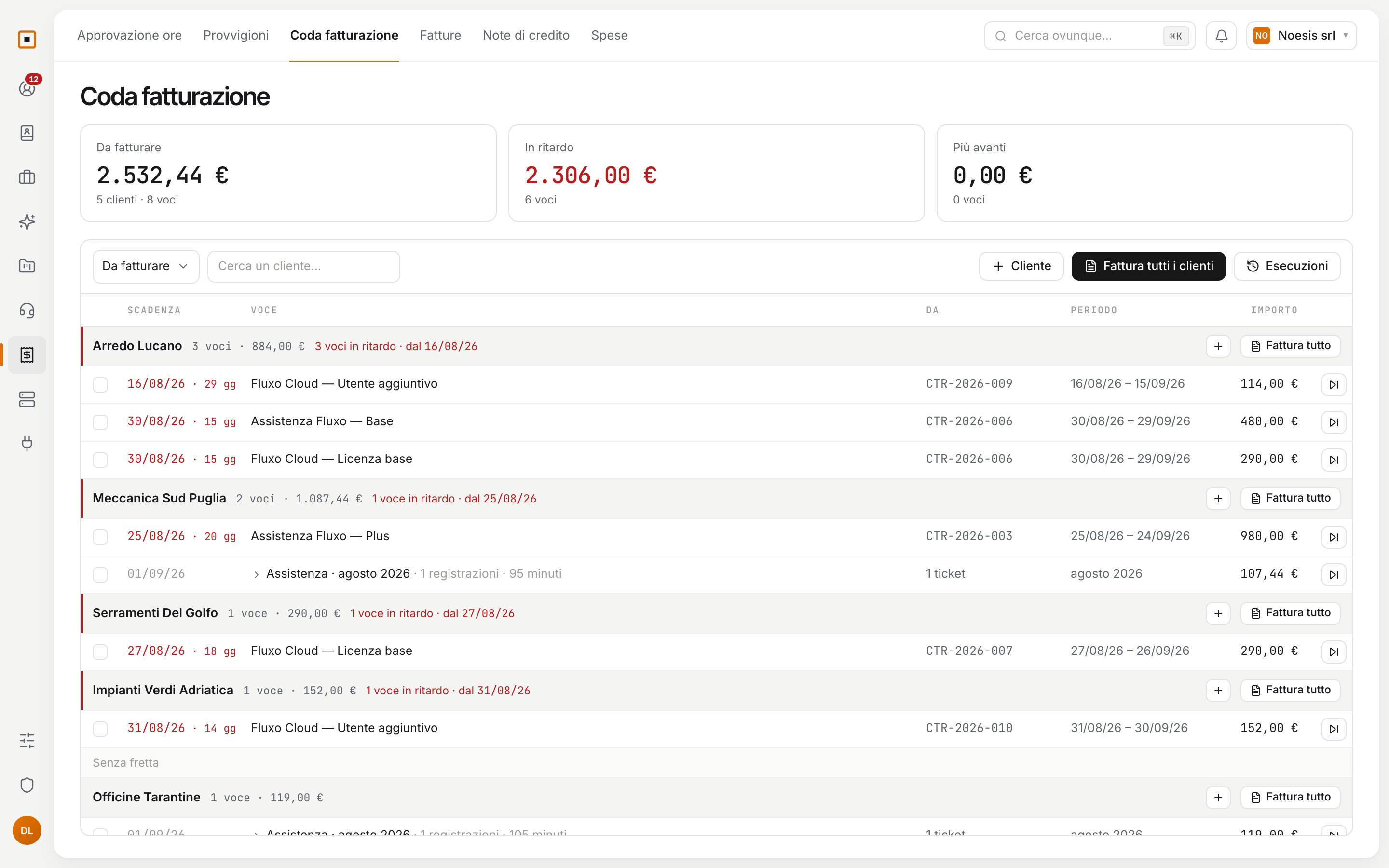
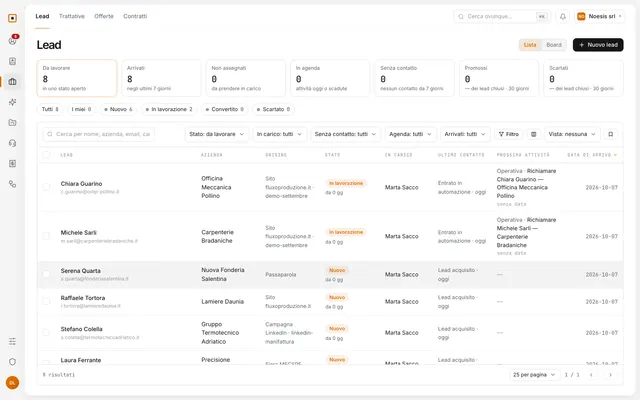
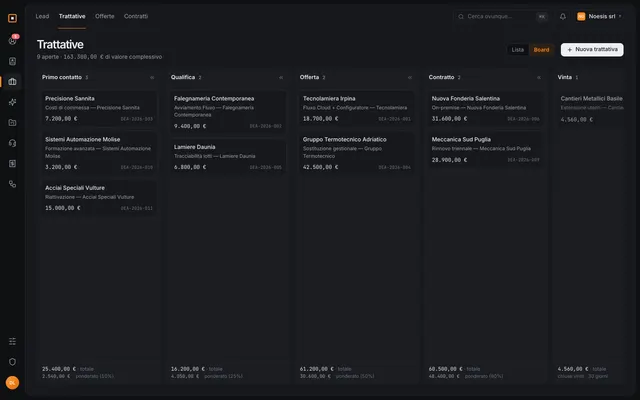
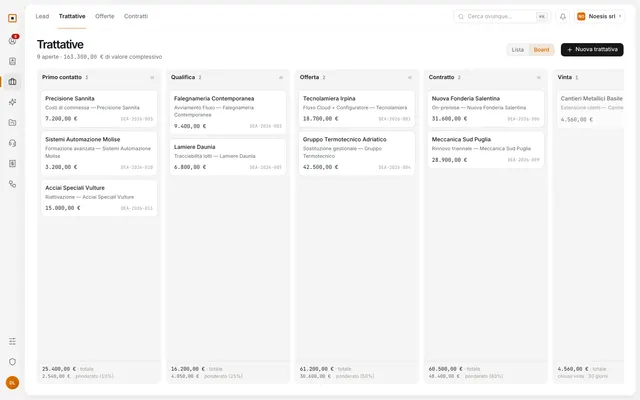
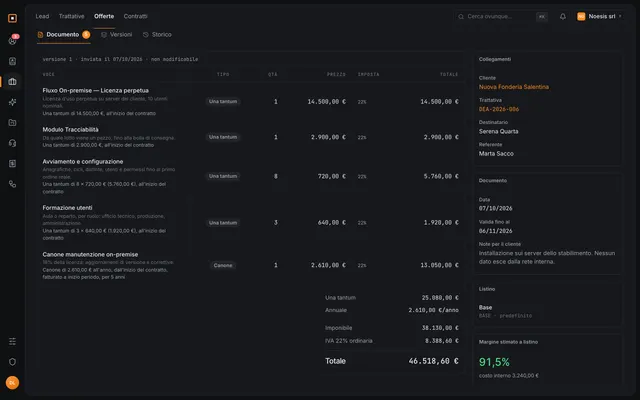
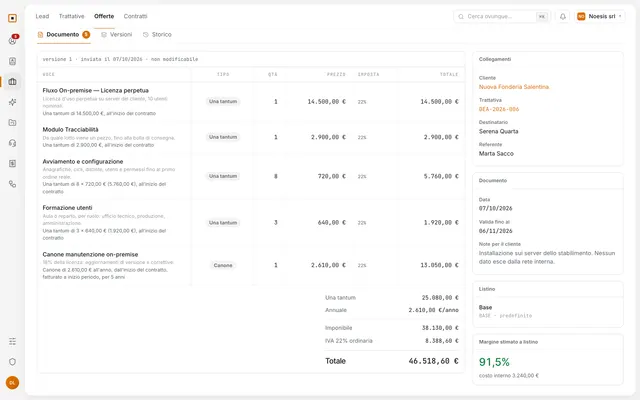
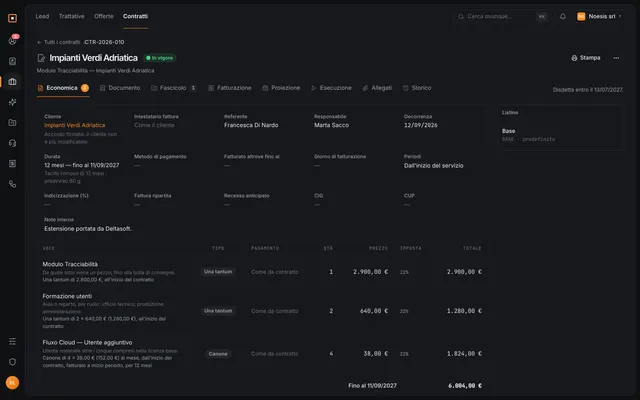
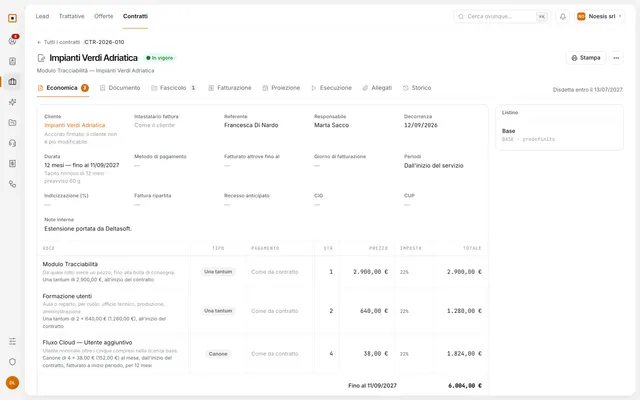
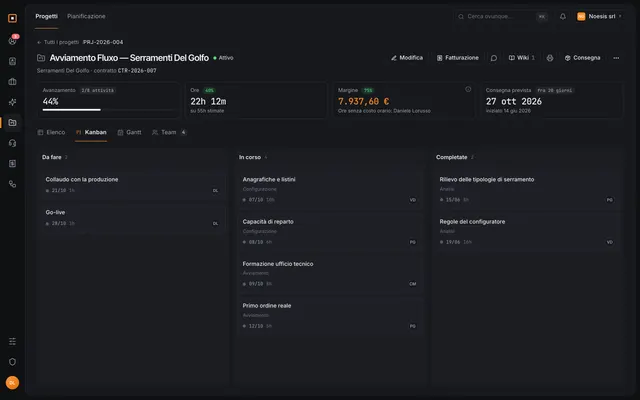
See AmbraDeals and quotes, projects and hours, tickets with SLAs, client portal and invoices in a single piece of software. When the client accepts a quote, the contract, the project and the deposit to invoice are already there.
It does almost everything, but before you use it someone has to configure it, often for months. You pay per seat and per module, and a twenty-person company ends up paying for modules nobody opens.
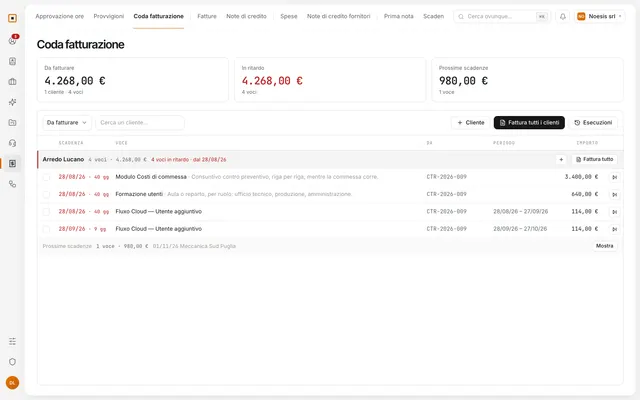
The CRM, the project tool, the timesheet, the invoicing program, the spreadsheets. The real cost is not the subscription: it is keeping them aligned by hand. On Friday someone retypes the hours, at month end someone reconstructs what to invoice, and a client’s margin is discovered once the books are closed.
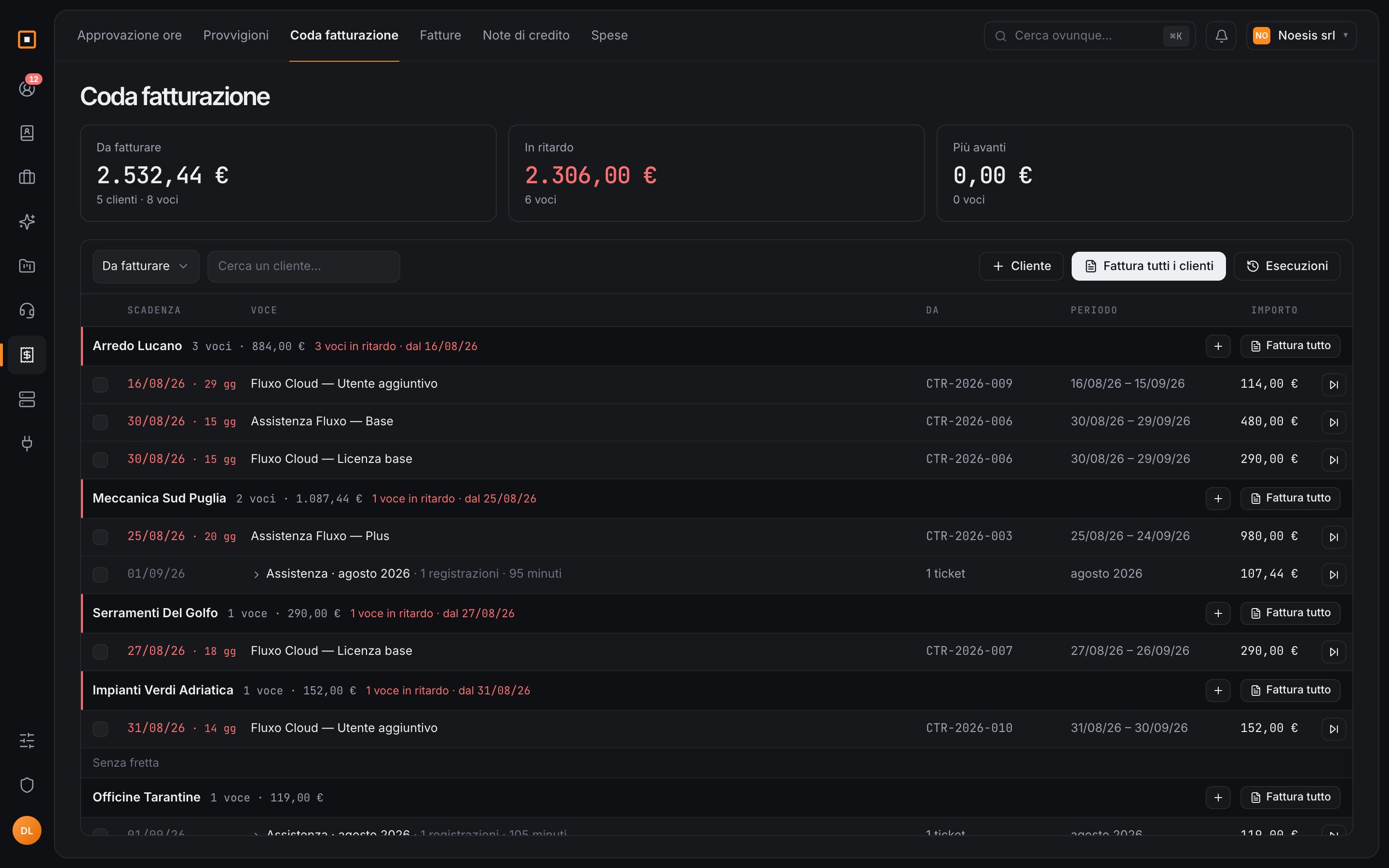
We put sales, delivery, planning and billing in one system. You can start from a single part, the CRM, the tickets or the projects, and use the others when you need them. We left bookkeeping out on purpose: Hakubase prepares the invoices and measures the margins, the tax ledgers stay with your accountant.
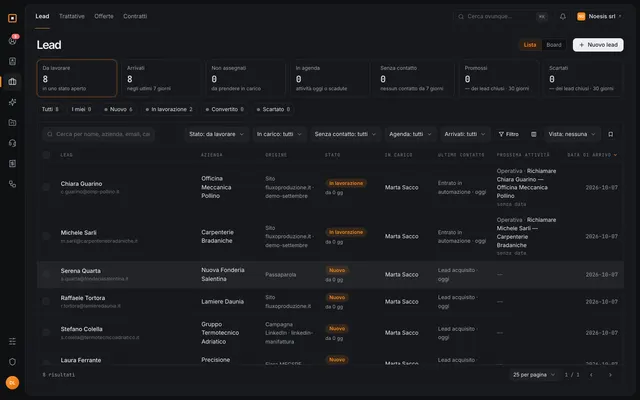
Lead, deal, quote, contract, project, delivery, invoice, margin: that is the full path, and no step is mandatory. A long-standing client gets a quote without ever having been a lead, an internal project starts with no contract, an invoice can cover a job agreed over the phone.
When the path is there, the system proposes the next step and you confirm it. Links can also be made later, between records created separately.
Hakubase’s AI works inside the gestures you already make: it triages an incoming ticket, drafts a reply, reads an invoice or a signed contract, prepares a project plan. Every result is a proposal.
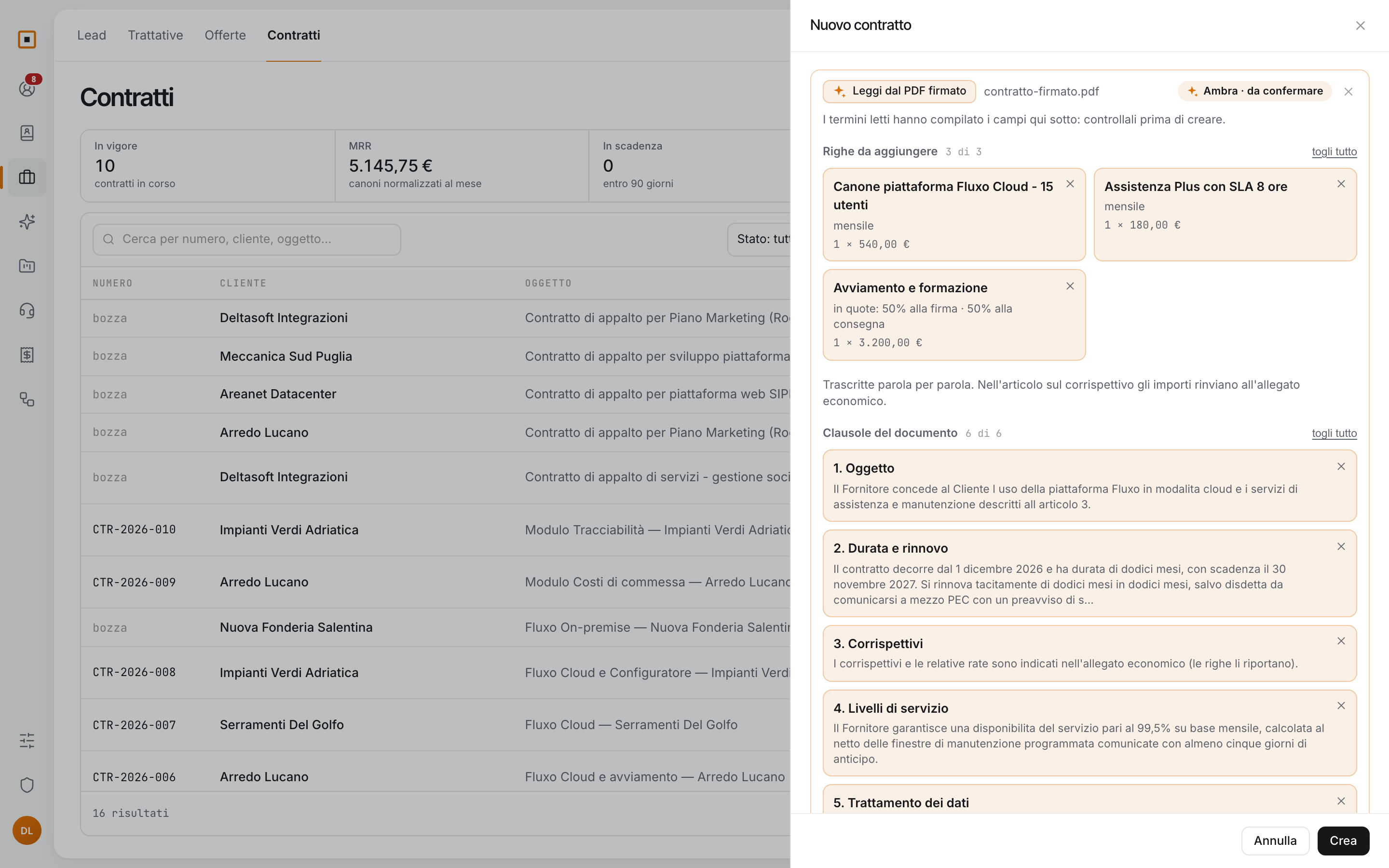
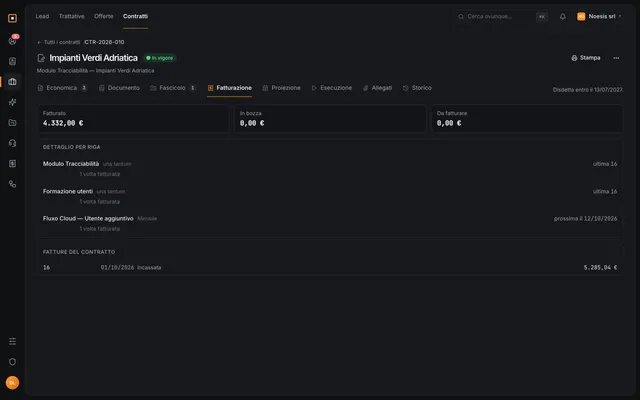
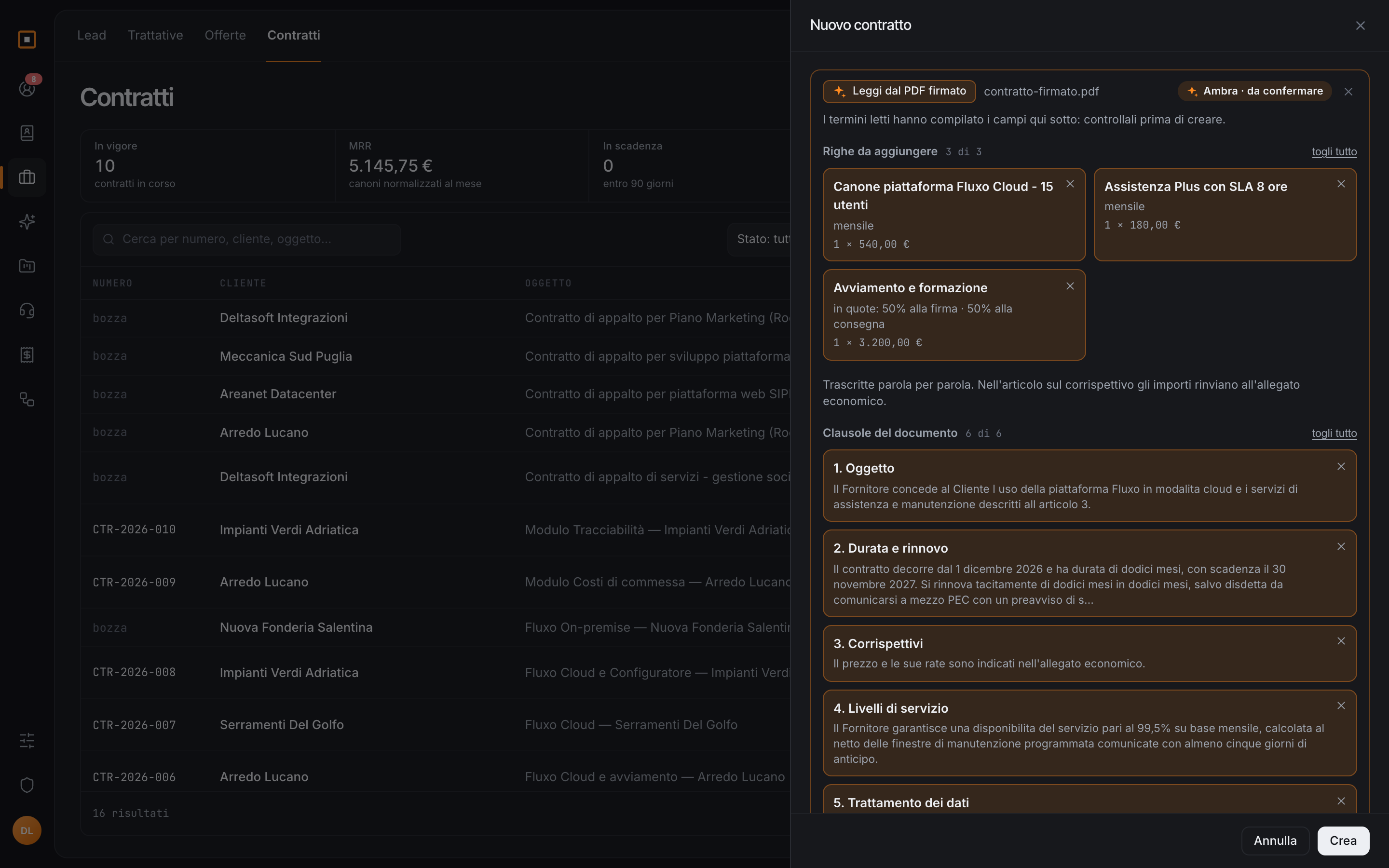
See AmbraUpload the PDF and Ambra pulls out parties, dates, renewal and notice, the lines with their instalments. The articles are transcribed word for word: a contract is not summarised.
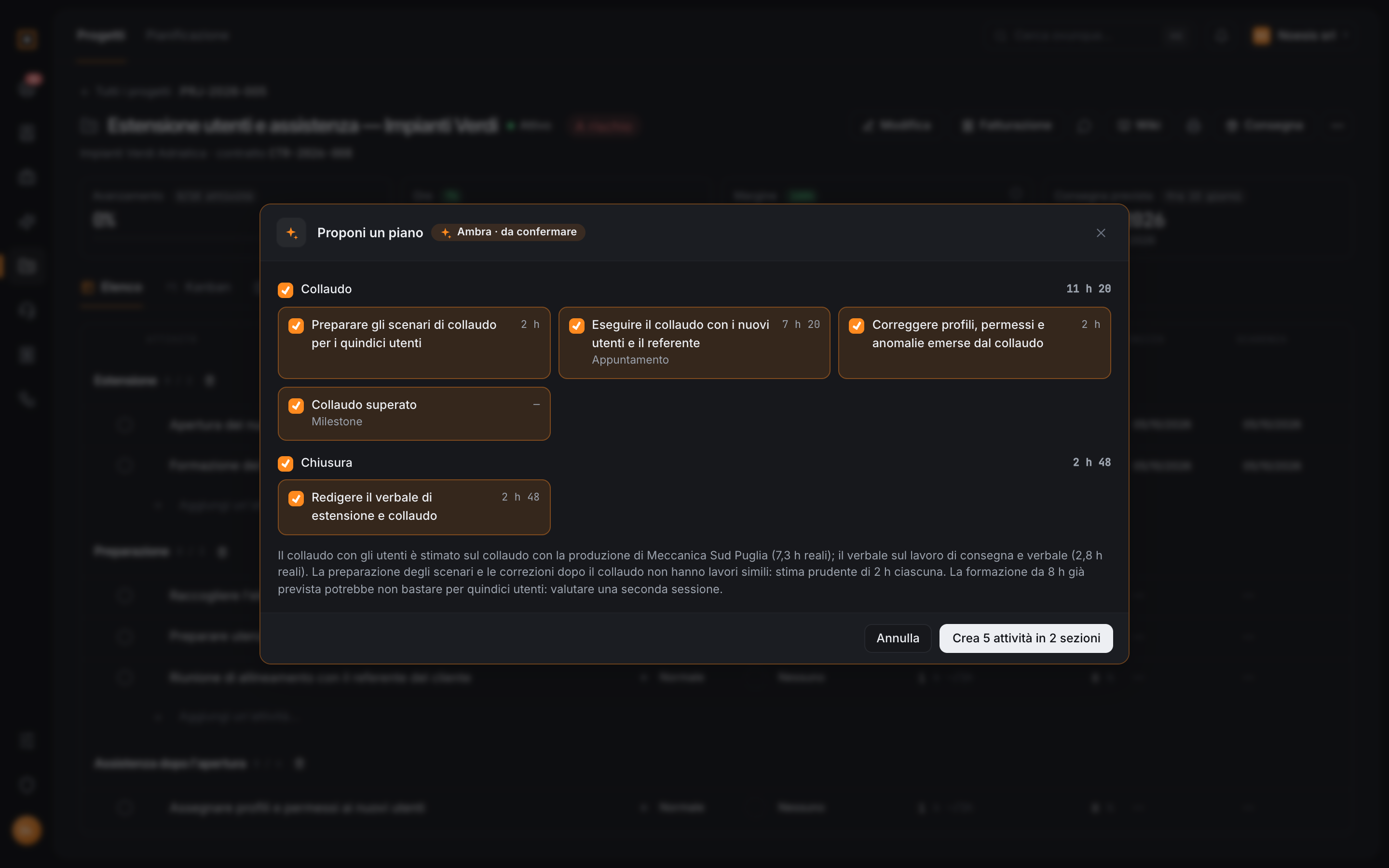
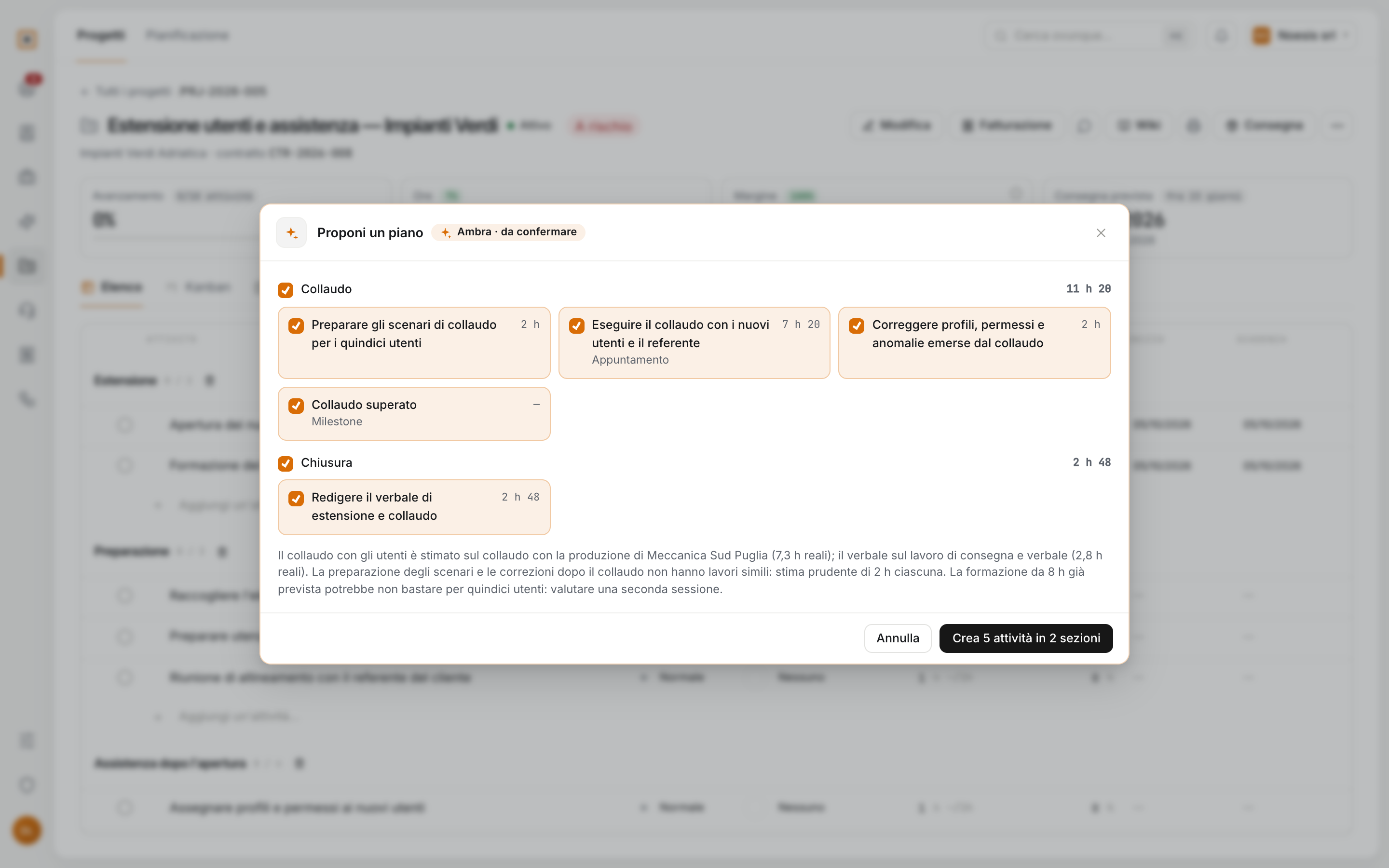
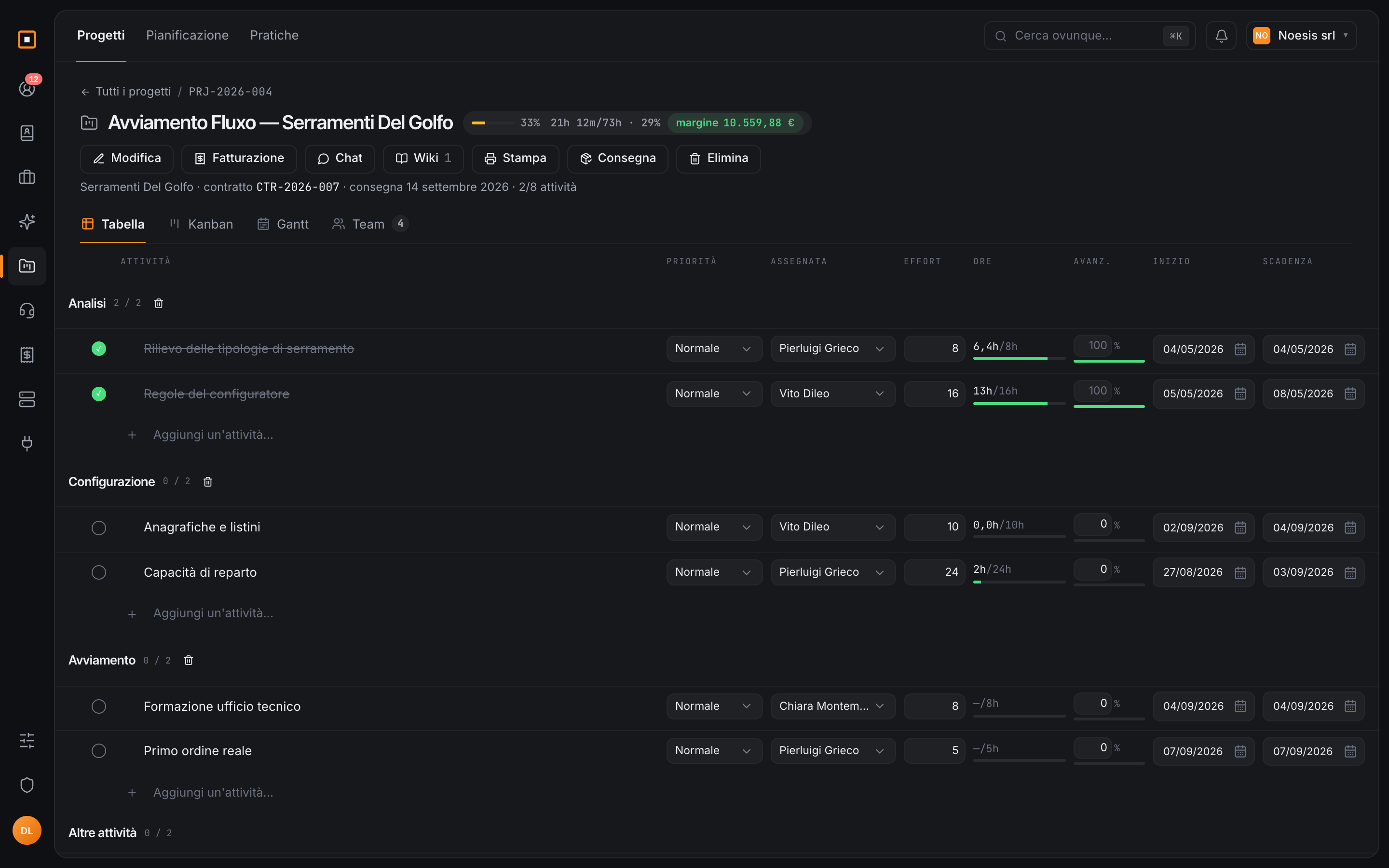
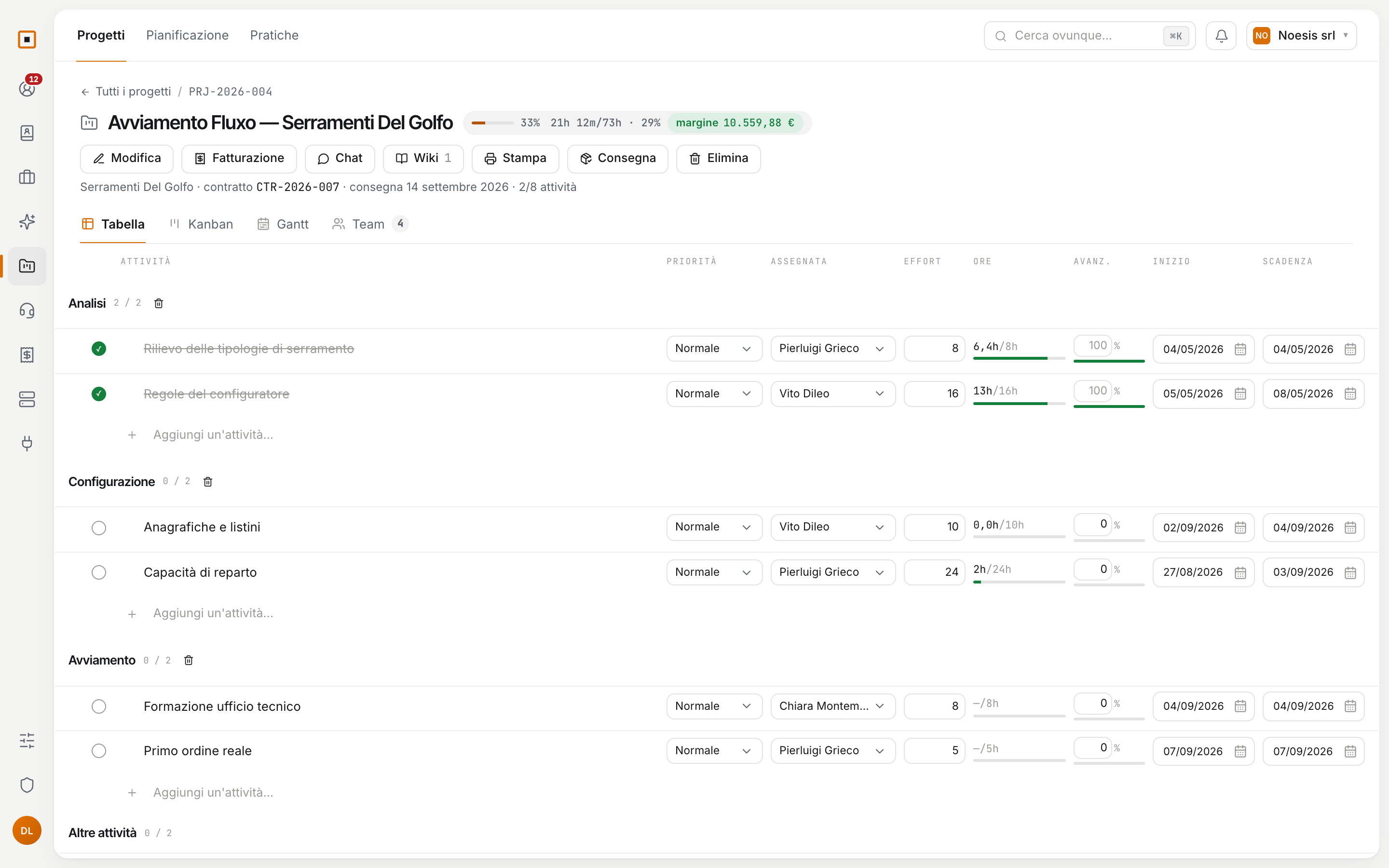
Sections and tasks with estimates, taken from similar work you have already delivered. Below, Ambra says which project each estimate comes from, and where there is none.
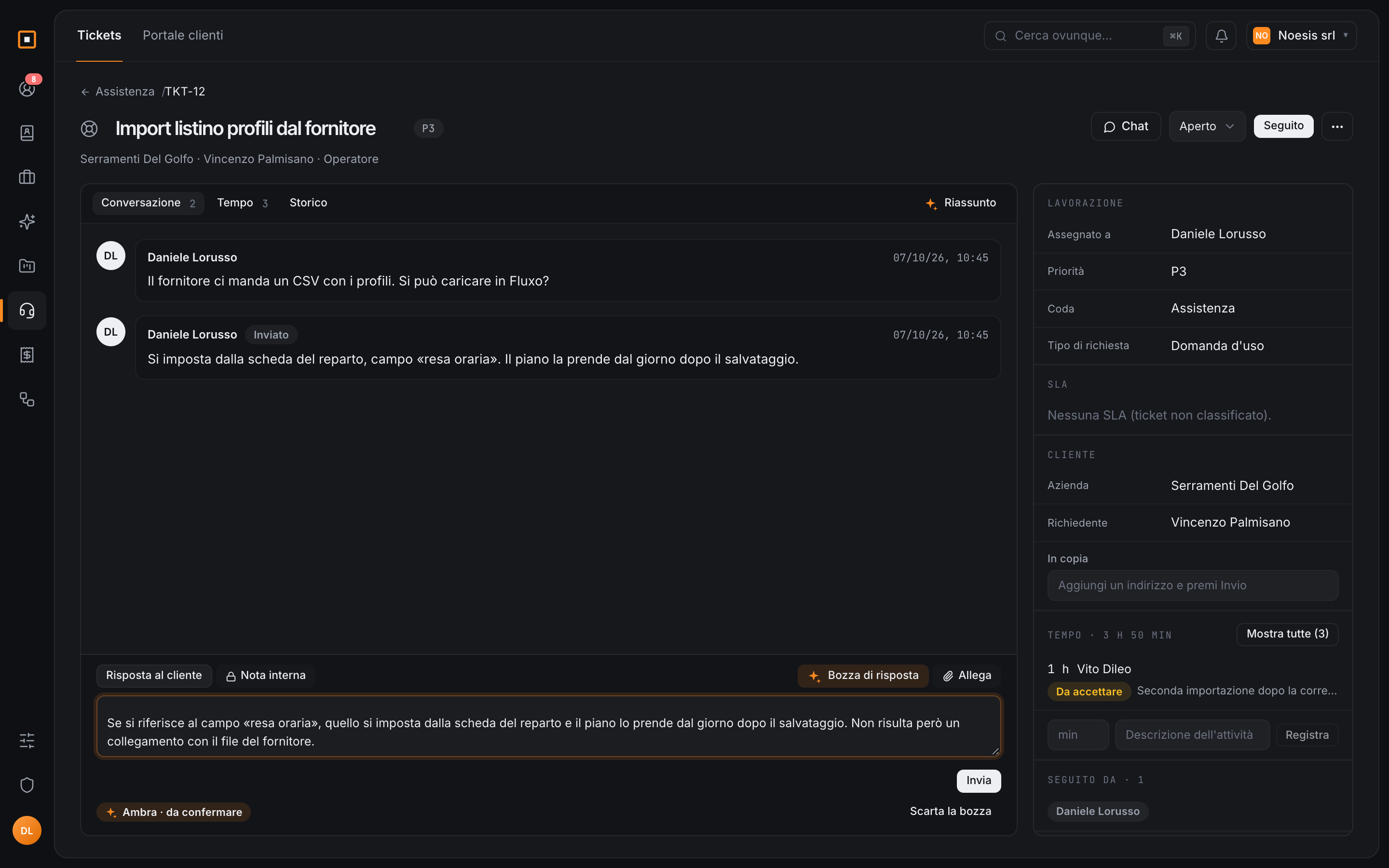
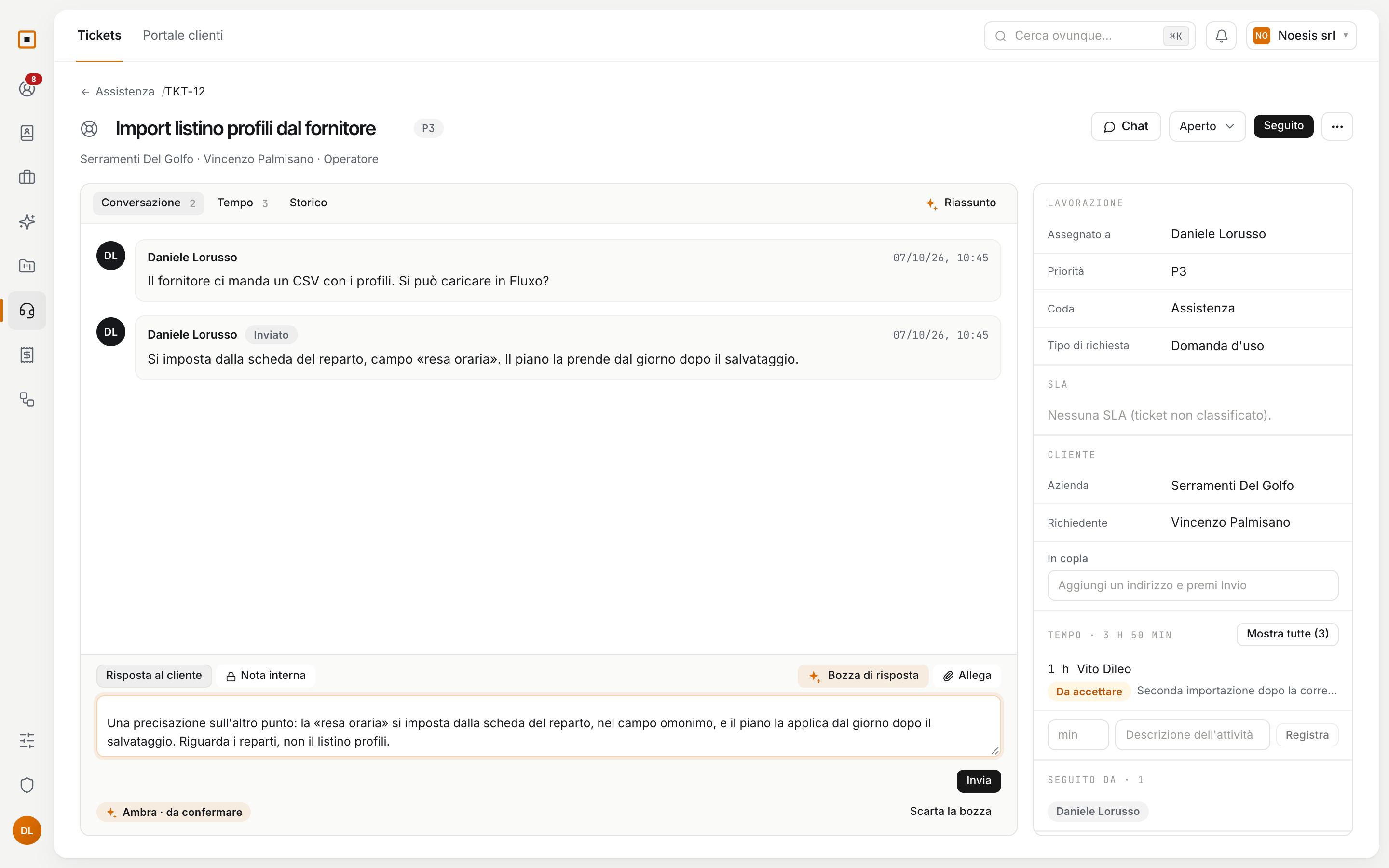
The draft lands in the reply field, in the customer’s language, as if you had written it. You correct it, shorten it, rewrite it: it leaves only when you press Send.
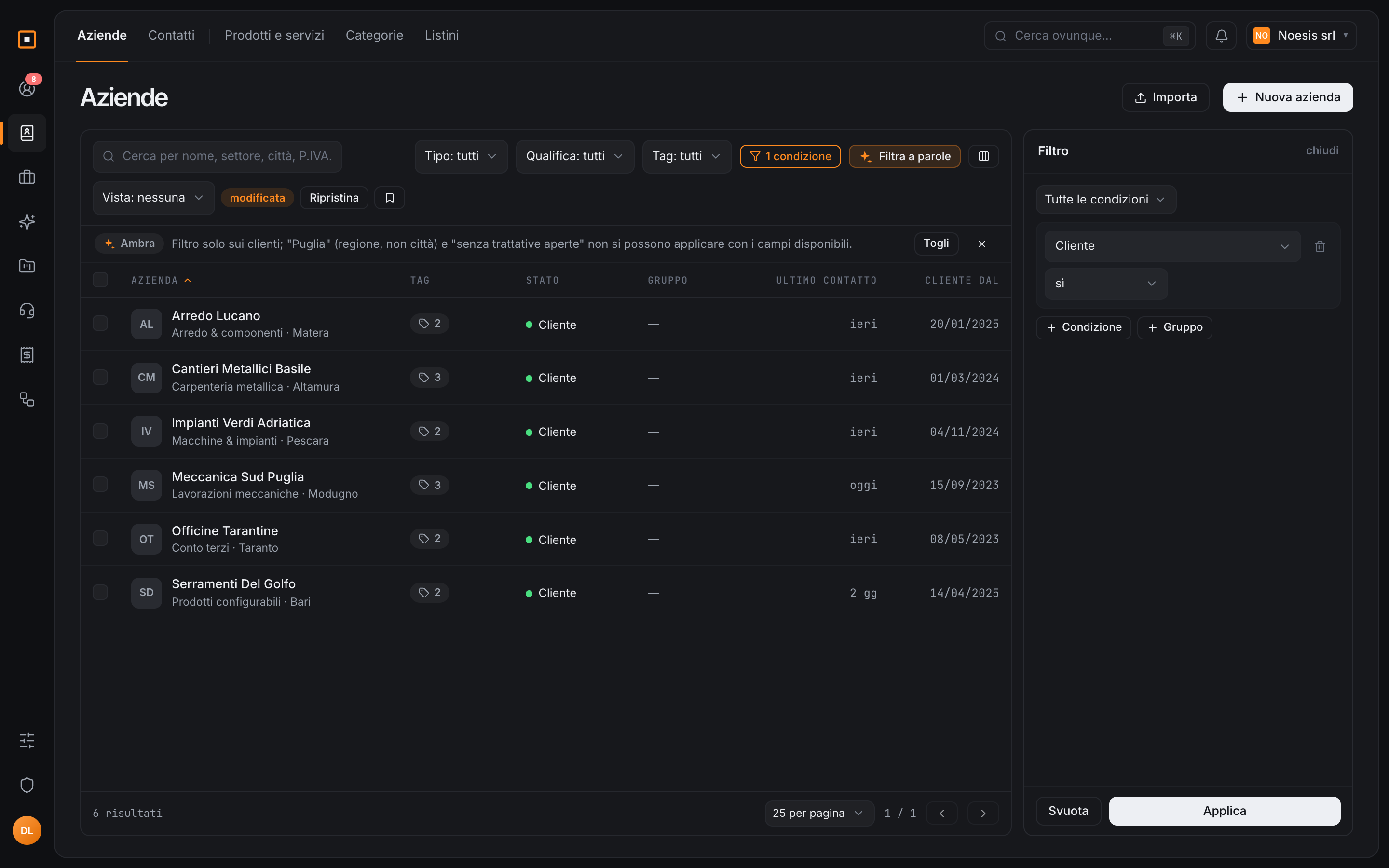
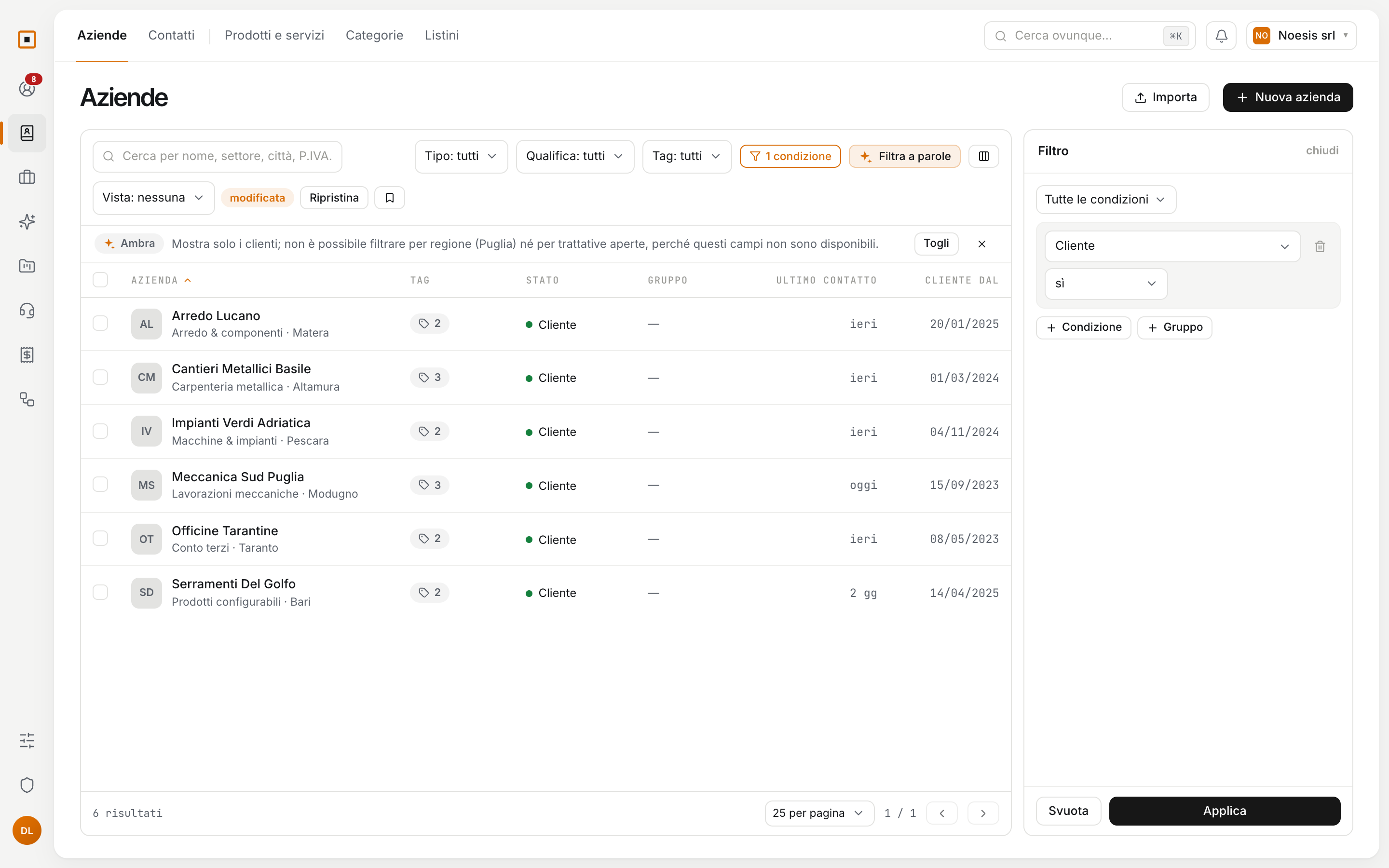
Write what you are looking for and the list filters, with a real filter you can still edit. And when part of the sentence cannot be filtered, Ambra says so instead of pretending.
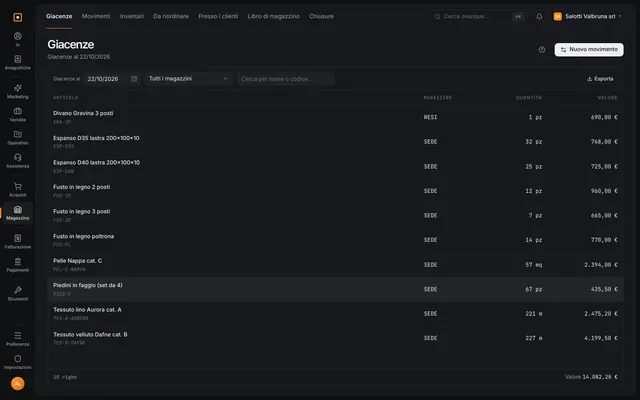
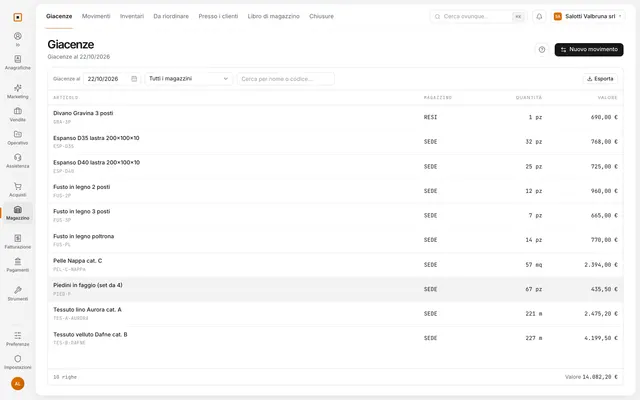
Take «Website maintenance, 12 months». You write it once in the catalog, with price and cost, and it becomes the quote line, the recurring contract item, the project task, the line in the billing queue at every due date and the base on which the seller’s commission accrues.
Catalog item Written once, with its standard price and cost.
Quote line It enters the quote at the client’s price-list price.
Contract item It becomes a recurring item, with its start date.
Project task It opens in the project, assigned to its default owner.
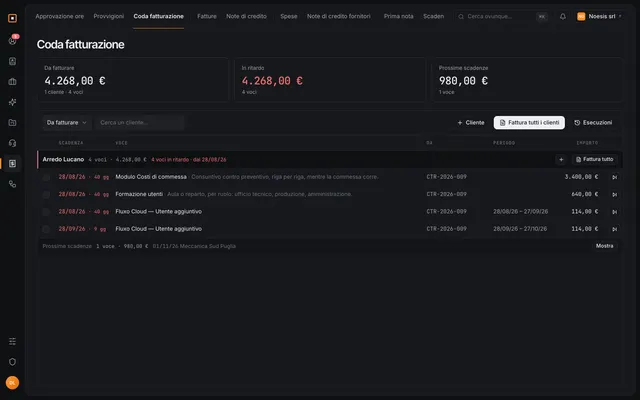
Invoice line It shows up in the billing queue at every due date.
Commission It accrues the share of whoever sold it.
For cases not worth structuring, free line items work outside the catalog.
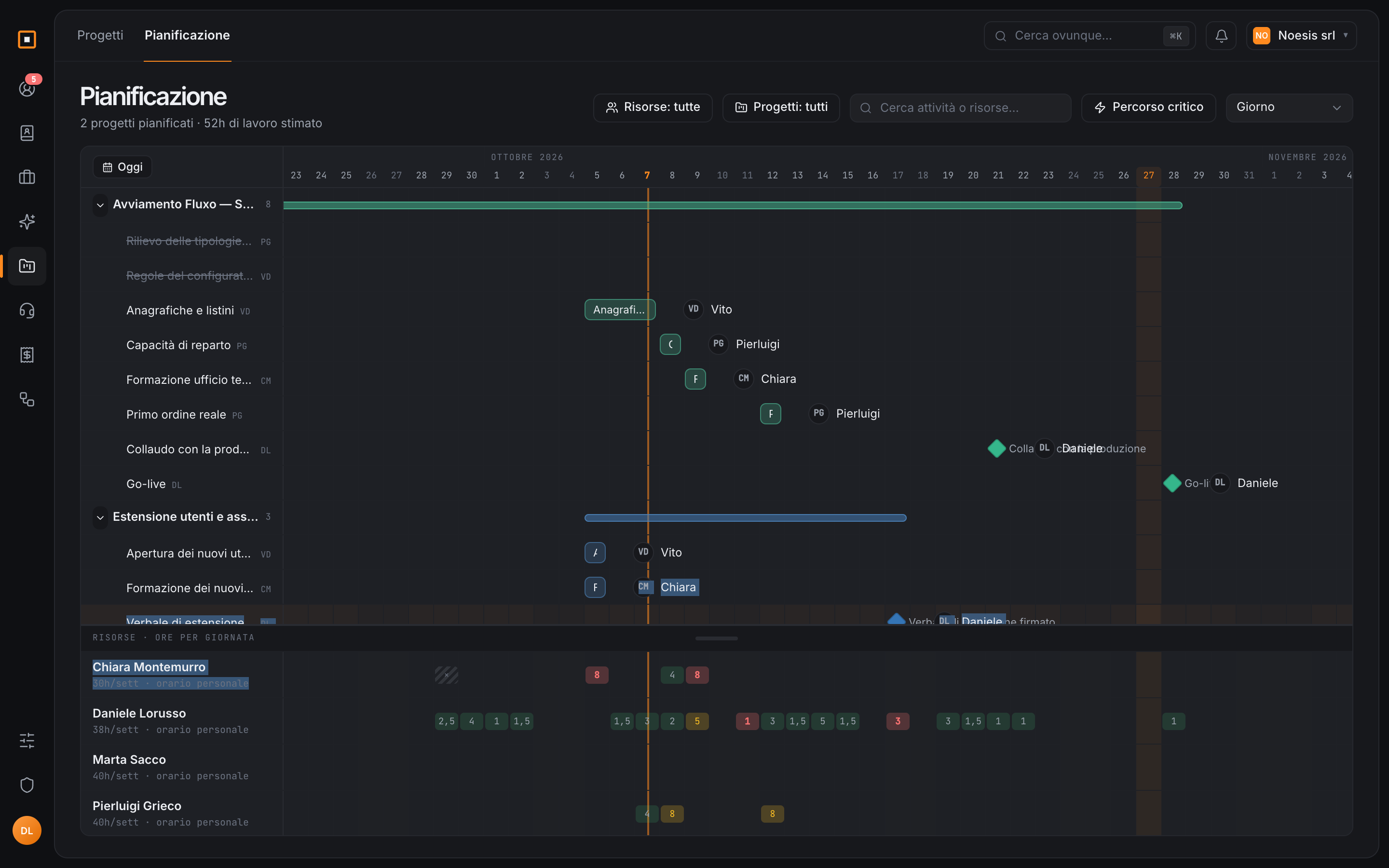
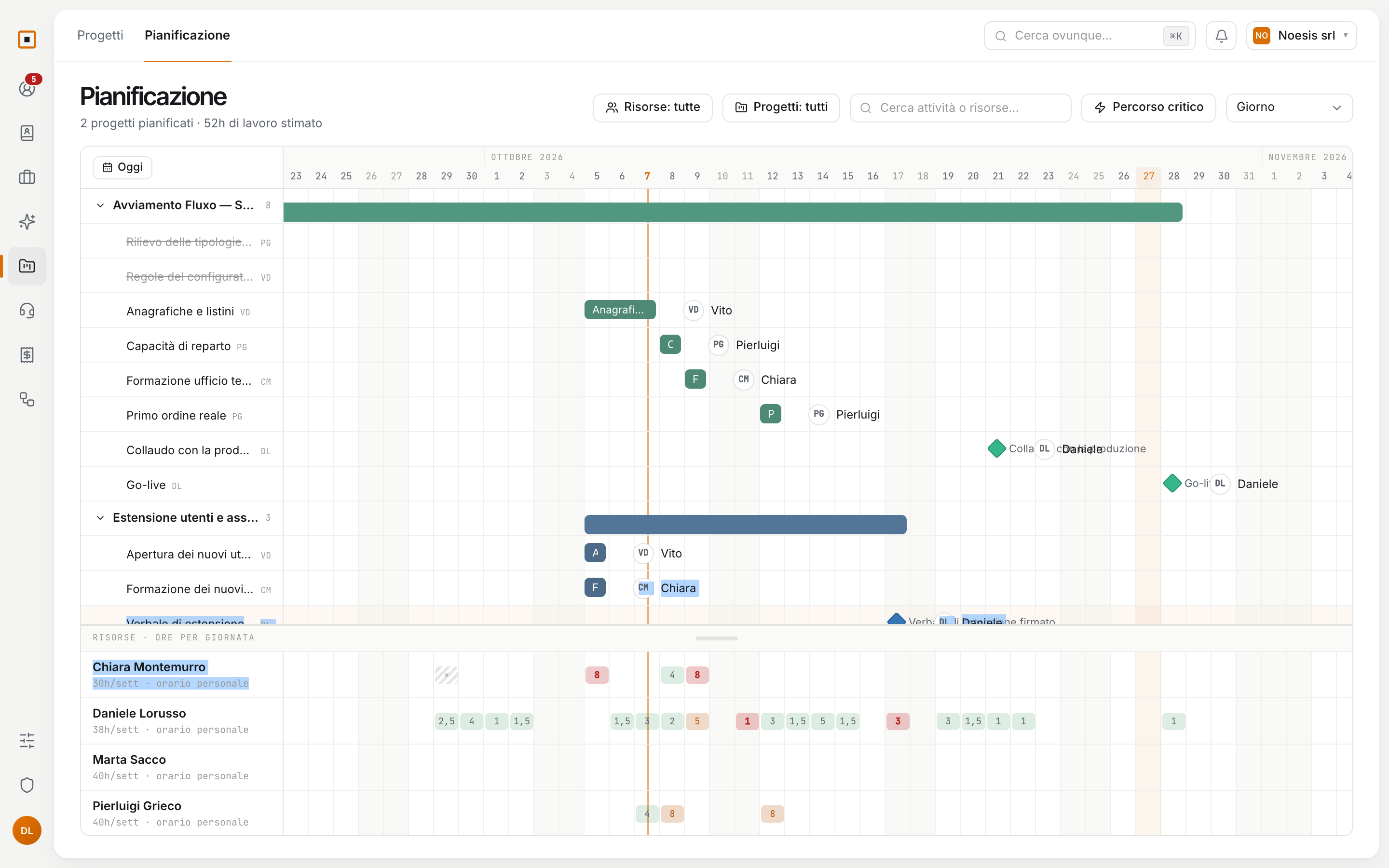
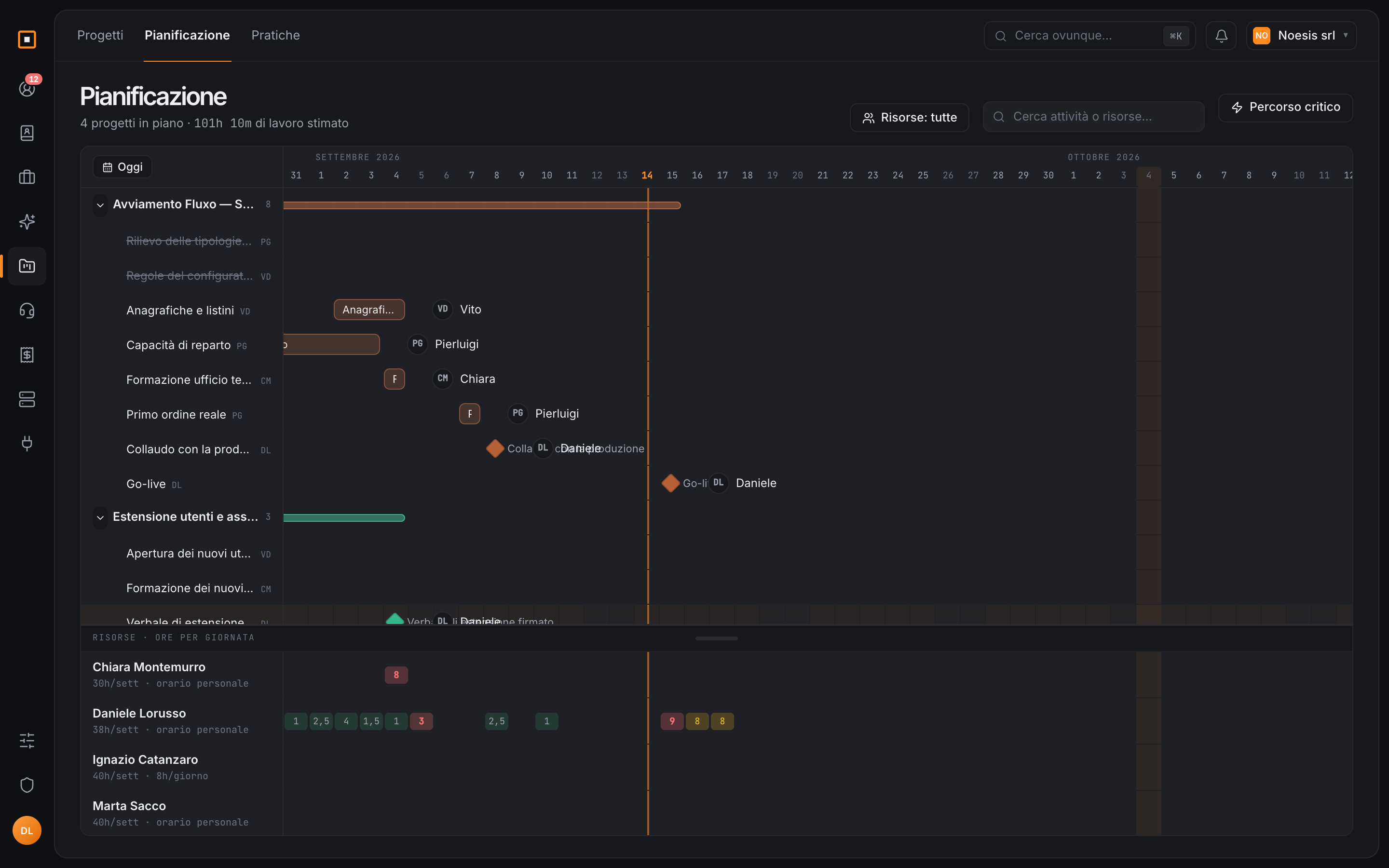
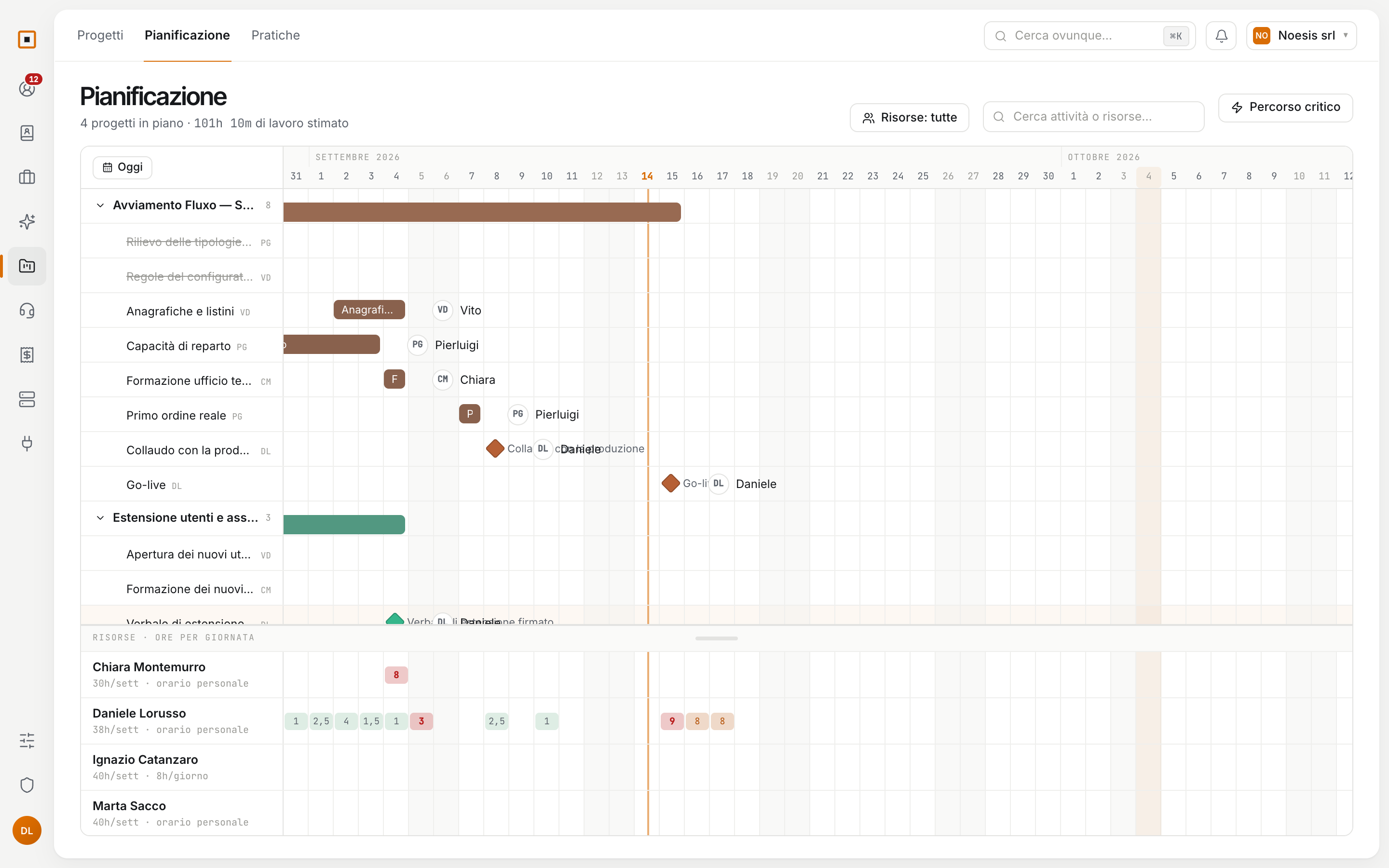
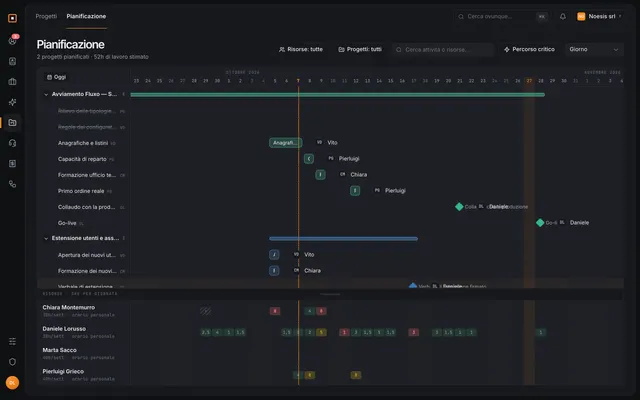
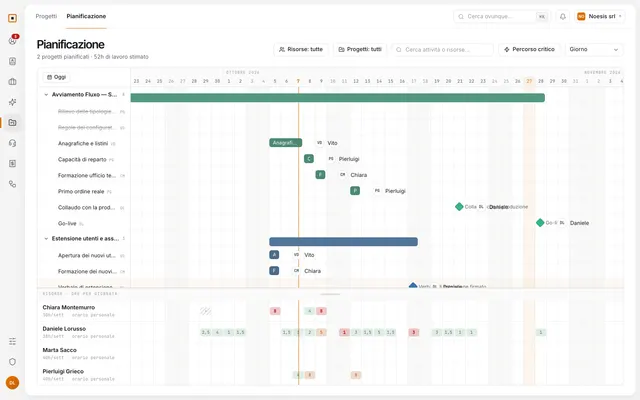
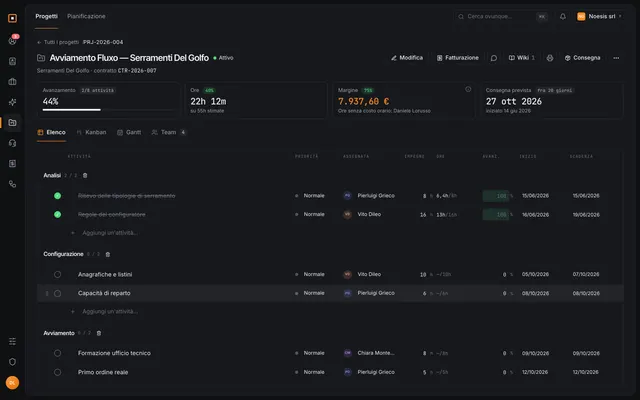
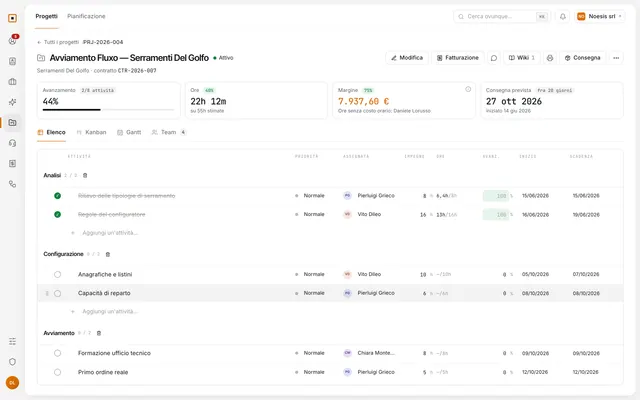
Every project ends up in a single plan: the Gantt with dependencies and critical path, and below it each person’s load day by day, with their working hours, holidays and company closures. If Marco works eight hours and has twelve assigned for Thursday across three projects, his day is already flagged on Monday.
Explore planning →
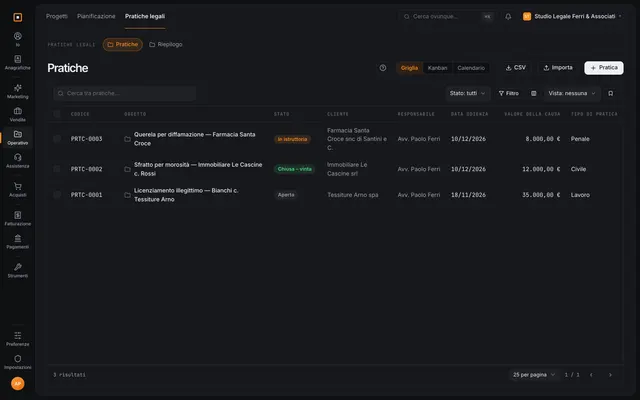
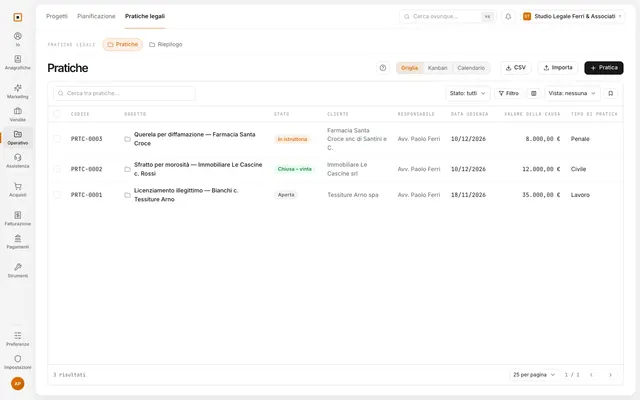
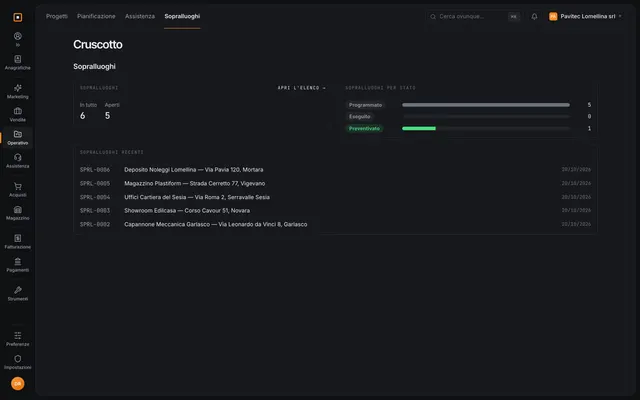
With App Studio you build the objects you are missing, with fields, states and buttons, and put them in the menu next to clients and invoices.
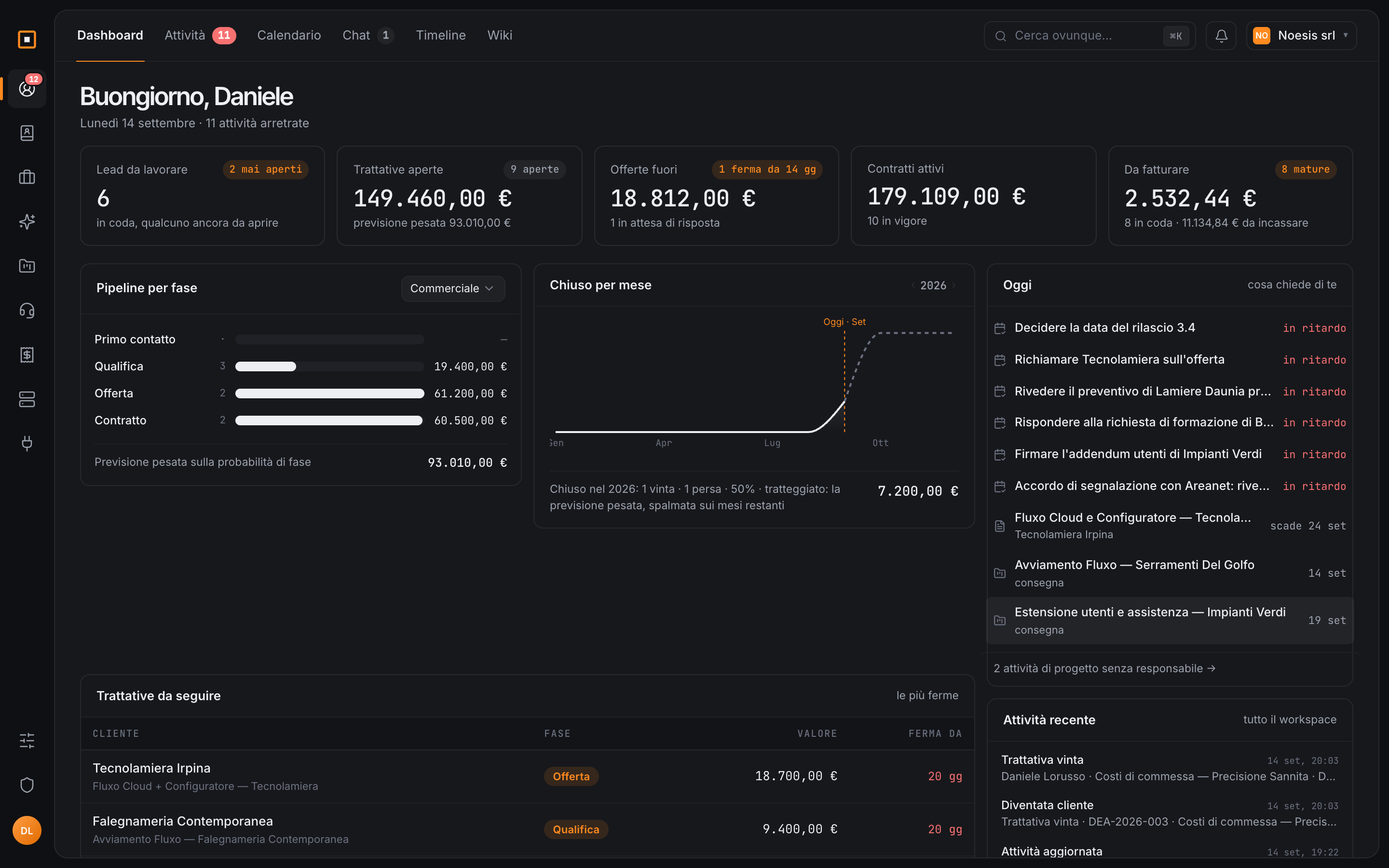
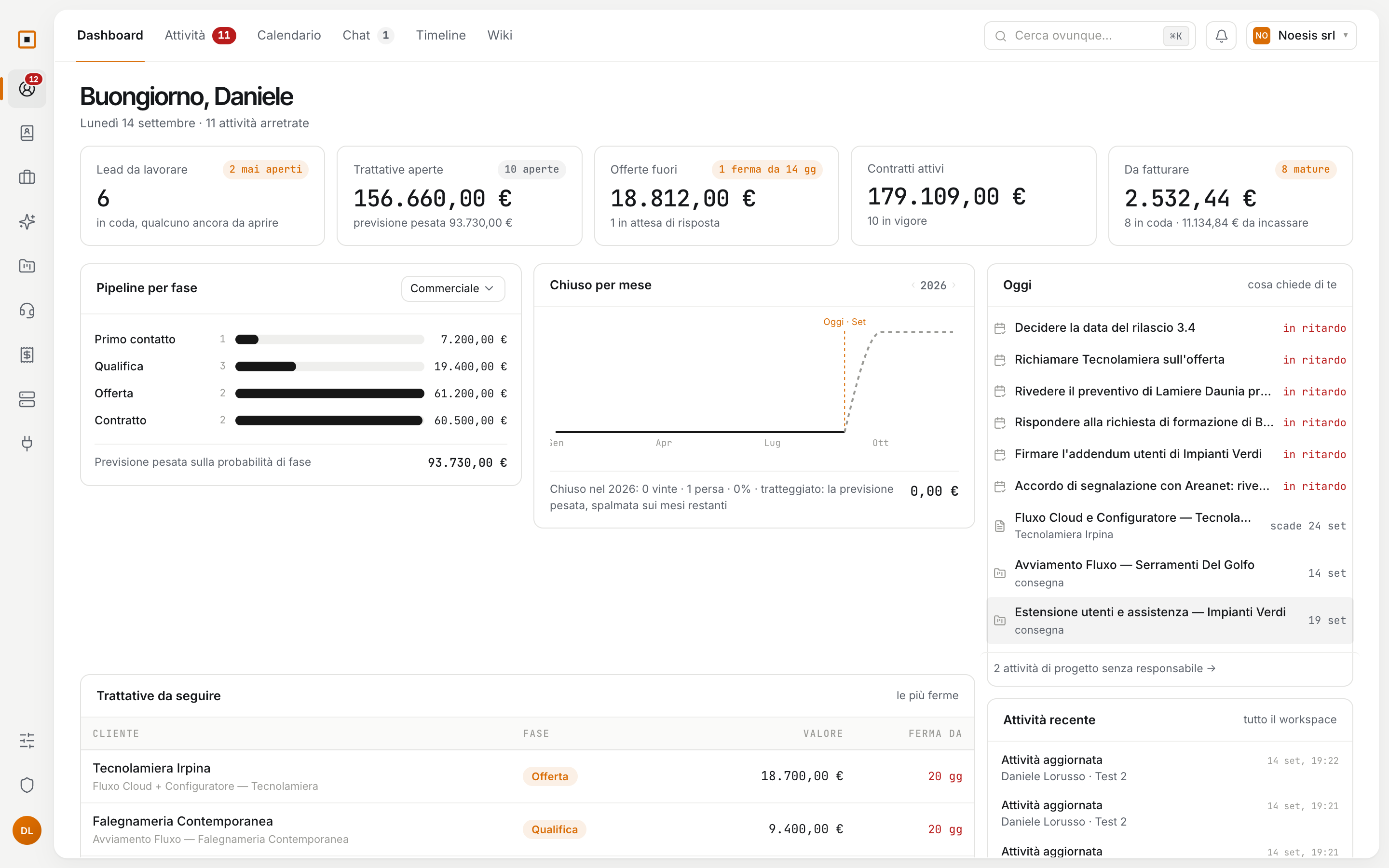
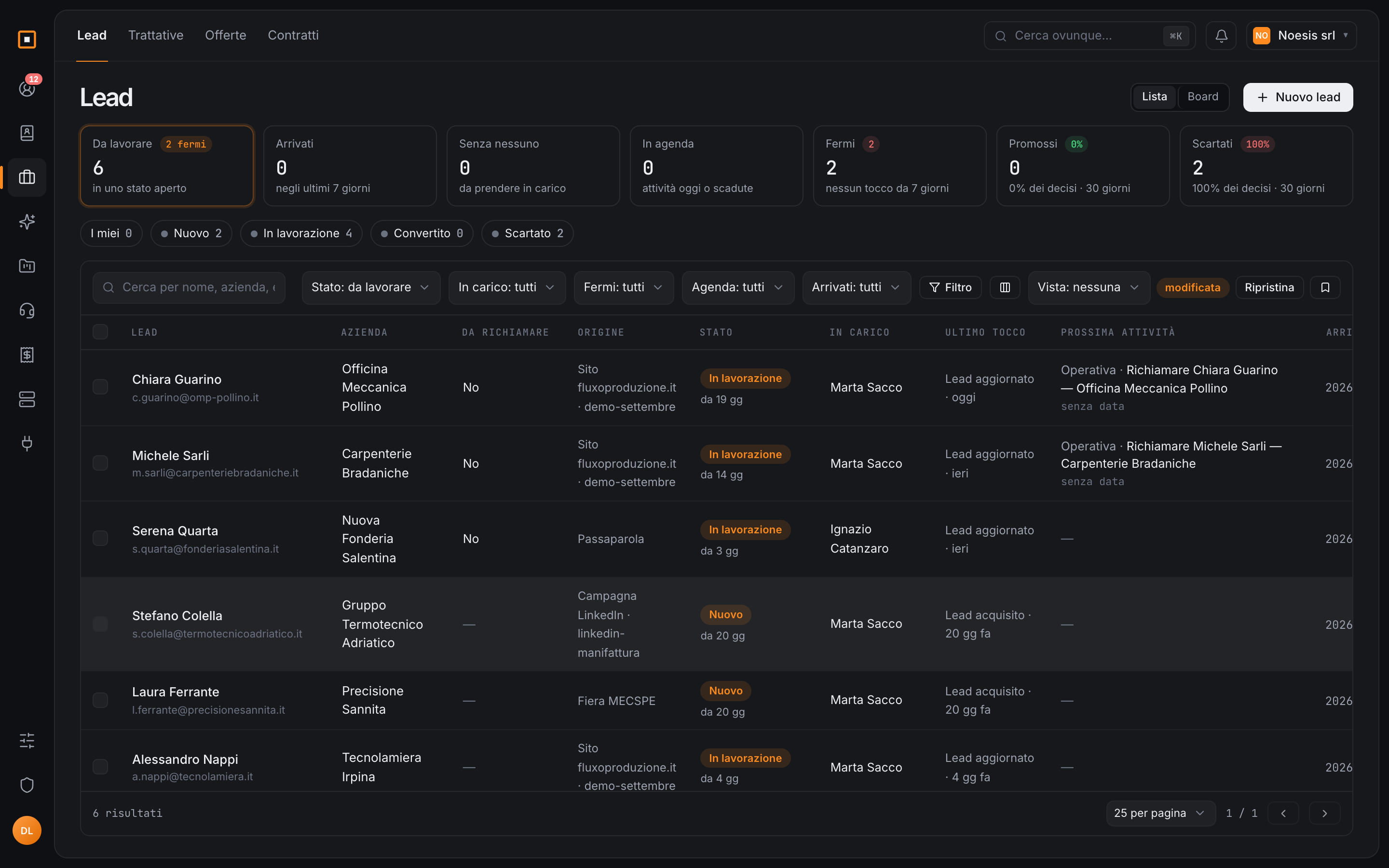
Each one has a page with real screens from the application. These are the ones used most.
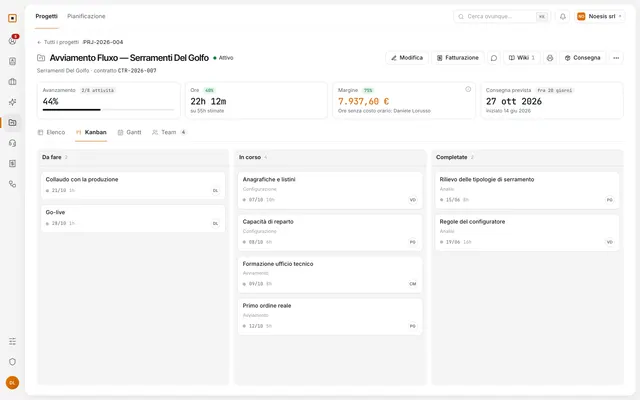
Every module reads and writes the same records. What changes in a quote shows in the contract and the project without anyone retyping it.
We set ourselves a rule: whoever signs in should get something useful done in the first fifteen minutes.
We do not add a module for every special request. Whoever has one builds it on top with the public API, webhooks and custom fields.
Every record has its timeline, and deletions destroy nothing: a quote from two years ago comes back with all its versions.
When you need something that is not there, you usually do not have to wait for us. There is a versioned API over thirteen resources, signed webhooks on the product’s events, and custom fields on companies, contacts, deals, quotes, contracts, projects, tasks and the catalog.
POST https://example.com/hooks/hakubase
X-Hakubase-Event: invoice.issued
X-Hakubase-Delivery: 01a1599c-5e2b-7c41-9d3a-6b0f2e8c7a14
X-Hakubase-Timestamp: 1791561612
X-Hakubase-Signature: sha256=9f2c41d7…e41a
{
"id": "01a1599c-5d90-7e02-8b61-3c7a9f04d2e8",
"type": "invoice.issued",
"occurred_at": "2026-10-09T15:40:12+00:00",
"subject": { "type": "invoice", "id": "01a1599c-5d1f…" },
"data": {
"public_number": "FT-2026-041",
"total": "30256.00",
"customer": "Fornace Nord S.r.l."
}
} You can open a trial workspace on your own, or write to us and we will show it to you starting from the problem you have.
No newsletter. We only write to set up the demo.